Won't heat, or won't hold temperature
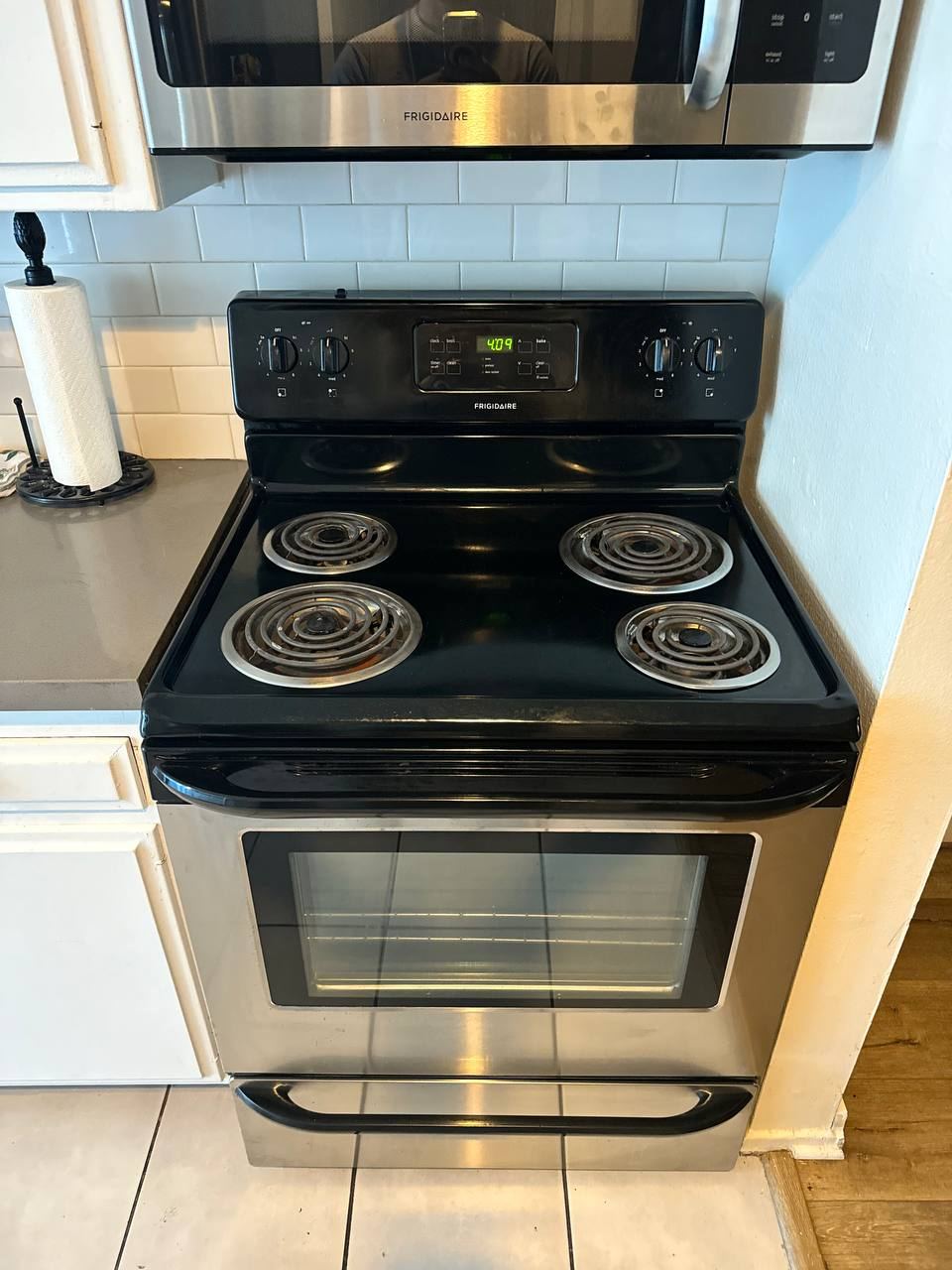
An oven that lights but drifts off temperature is usually the sensor or the igniter, and which one it is depends on the fuel. On a gas oven, a weak igniter draws too little current to open the safety valve, so the oven cycles and never settles. On electric, the bake element and the temperature sensor are the two candidates, and both are testable in minutes.
An oven that is 30 degrees off across the whole range is often just calibration, which is a menu setting on most modern units rather than a repair at all.
Cooktops, panels and self-clean lockouts
Self-clean cycles are the single most reliable way to kill an older oven, because the heat takes out the thermal fuse or the control board on the way through. If your oven died right after a self-clean, that is not a coincidence and it is usually a fixable one.
Sealed burners that click without lighting are almost always a wet or dirty spark electrode rather than a failed ignition module. That one is worth cleaning yourself before anyone comes out.
Questions we get
Do you work on professional ranges?
Yes, including Thermador and Miele. Gas ranges get treated as gas appliances, with the safety circuit checked as part of the job.
My burner clicks and clicks and will not light
Dry the burner cap and the electrode thoroughly and clear the ports with a pin, not a toothpick. If it still clicks, the module or the switch is the next step.