What usually fails
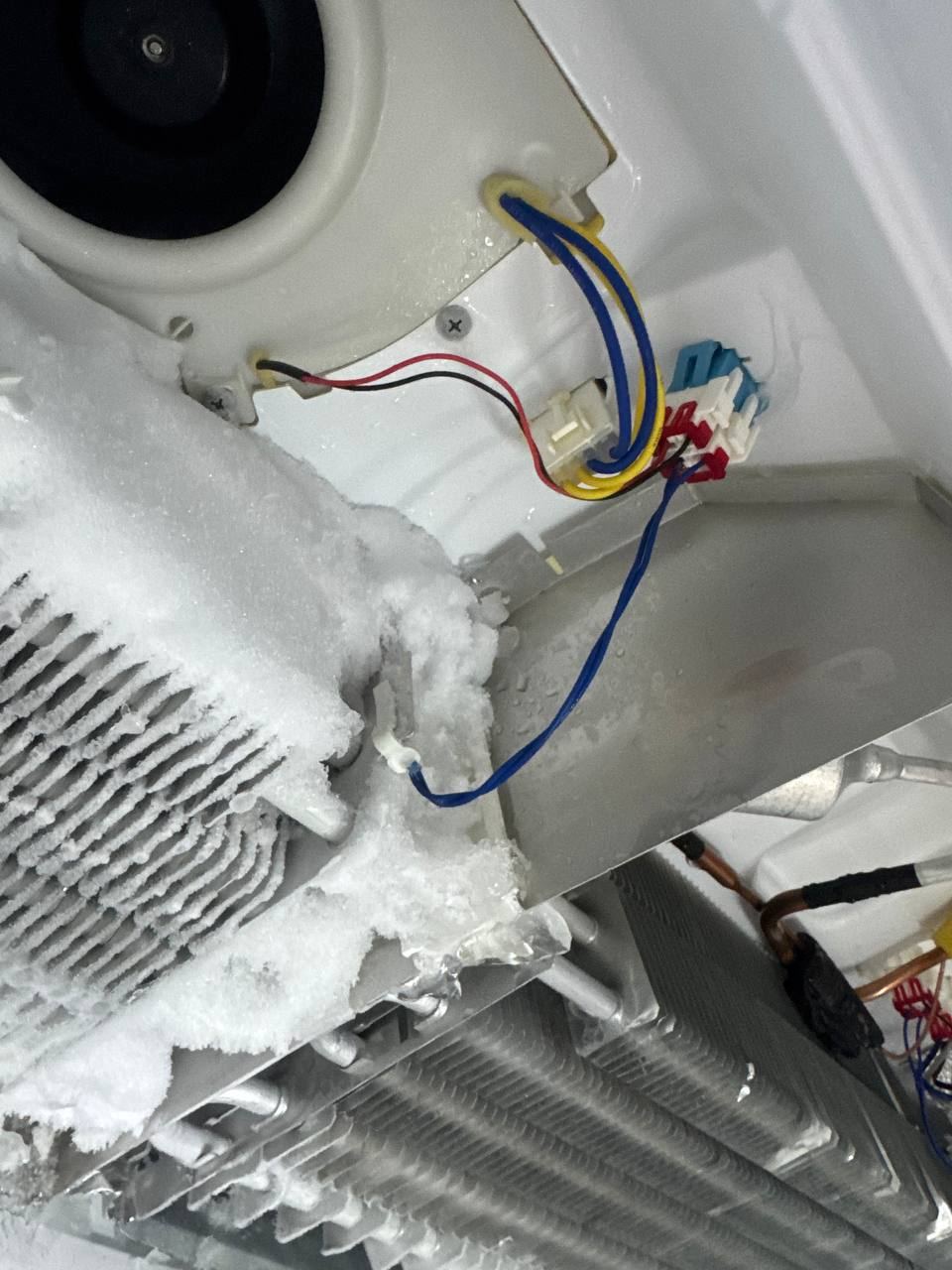
When the fridge section is warm and the freezer is still making ice, the compressor is almost never the problem. The cold air is being made and it is not getting moved. On most side-by-side and bottom-freezer units that means one of four things, in order of how often we find them.
- Evaporator fan motor seized or running intermittently. You can often hear it, or rather not hear it, with the freezer door switch held in
- Frost blocking the evaporator coil because the defrost heater or the defrost thermostat quit
- Damper or air diffuser stuck closed between the two compartments
- Control board losing the defrost cycle, which is the expensive end of the list
A sealed system fault, meaning a refrigerant leak or a dead compressor, is real but far rarer than the internet suggests. It is also the one category where the repair genuinely competes with replacement, and we will tell you that on the spot rather than after the invoice. We wrote the long version of this diagnosis in fridge warm but freezer cold, and a broader walk through the appliance in refrigerator repair, explained.
What you can check before calling anyone
- Pull the unit out and vacuum the condenser coils. On a fridge that has been against the wall for five years this alone fixes a surprising number of "not cold enough" complaints
- Check that the vents inside the fresh food compartment are not blocked by a wall of groceries
- Listen at the freezer with the door switch pressed in. No fan sound at all is a strong clue
- Confirm the door seal actually seals. A dollar bill closed in the gasket should drag when you pull it
- Read the temperature with a glass of water left in the middle shelf overnight rather than trusting the display, which reports the setpoint and not the air
If all five are fine and it is still warm, that is when a technician earns the visit.
Frost on the coil, and why it comes back
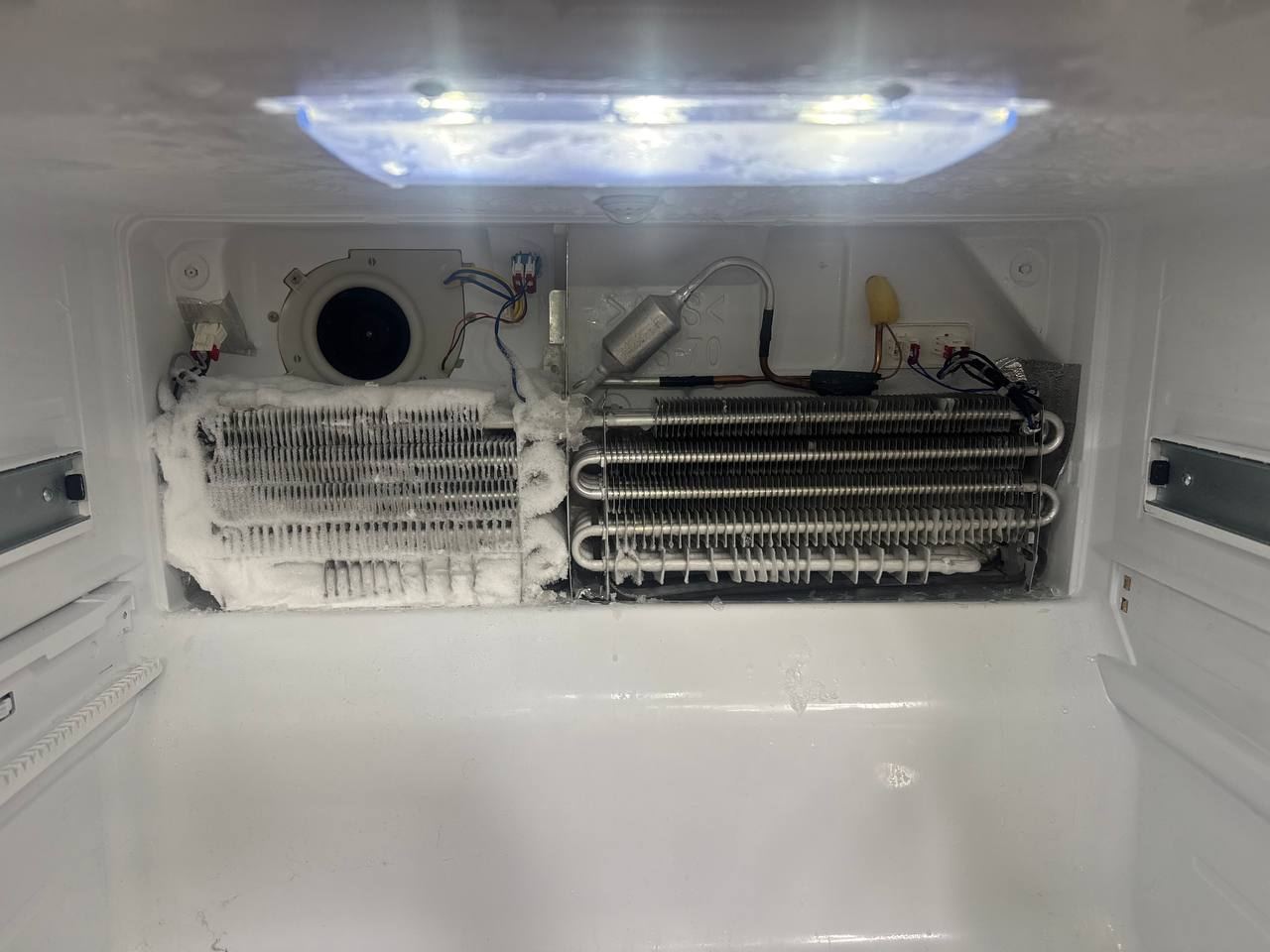
A frost-free refrigerator is not frost free. It grows frost on the evaporator coil constantly and then melts it off on a schedule. When any part of that circuit stops working, the frost simply keeps building until it blocks the airflow through the coil, and the first compartment to notice is the fresh food side.
That is why melting the ice with a hair dryer buys about two weeks. The unit cools beautifully once the coil is clear, and then the same call comes back. The fix is finding which part of the defrost circuit stopped, not clearing the ice. The heater, the thermostat or bimetal, the sensor and the board each fail in their own way, and each is checked differently.
Ice makers and water lines
The ice maker is the part most likely to be blamed and least likely to be at fault on its own. A unit that stopped making ice usually has a supply problem rather than a broken ice maker, and the order of suspicion runs from the saddle valve or shutoff, through the inlet valve, to a water line frozen inside the door channel. We laid out the sequence in ice maker not making ice, and the dedicated page is ice maker repair. Standalone units and garage freezers are on freezer repair.
Built-in and column units
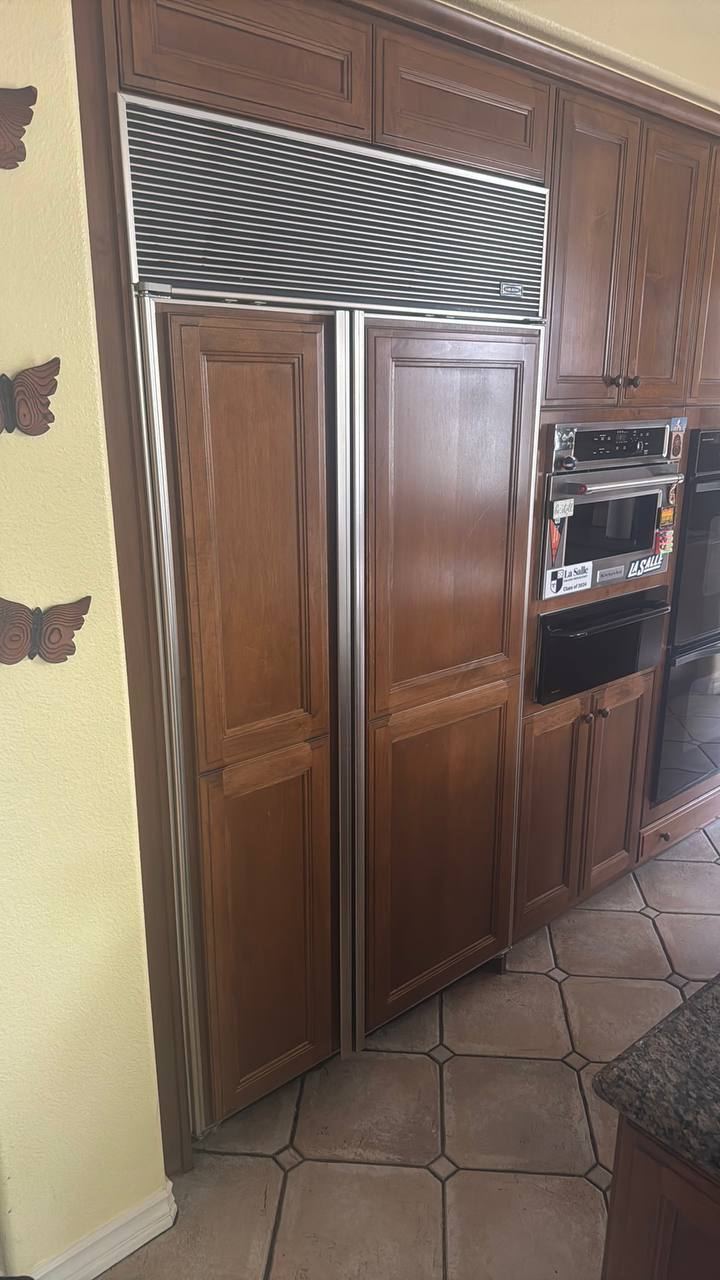
Built-in and column refrigeration is not a bigger version of a freestanding unit. On Sub-Zero Classic and PRO 48 models the condenser sits behind the grille at the top of the cabinet, and Sub-Zero asks for that area to be cleaned every three to six months. Most of the units we open in the Valley have never had it done once.
The panels also come off in a set order or they do not come off at all, and a cabinet that has been trimmed into custom millwork gives you one chance to get that right. Replacement is rarely the cheaper answer here, because it has to fit an opening built around the old machine. We service these as the manufacturer specifies rather than improvising, on Sub-Zero, Thermador, Miele, Viking and Bosch.
Where the self-help stops
Everything above is safe to do with the unit unplugged. The sealed system is where that ends. Check the data plate inside the fresh food compartment or on the back of the cabinet. Older units read R134a. Many newer ones read R600a, which is isobutane, and it is flammable. The EPA approved it for new household refrigerators under the SNAP program in 2011 and specifically did not approve it for retrofitting existing appliances, on flammability grounds.
That matters in a practical way. Opening a sealed system, brazing near it, or charging it is licensed work with recovery equipment, and on an R600a unit it is licensed work near a flammable gas in an enclosed kitchen. If your diagnosis has arrived at the compressor or a leak, stop there and let someone with the license and the recovery gear finish it.
What we see in Valley kitchens
Two patterns come up constantly in our area. The first is the garage refrigerator. A second unit in an unconditioned West Valley garage runs a far longer duty cycle through August than the same model in the kitchen, so a marginal condenser fan or a dust-packed condenser shows up out there first and shows up as warm beer rather than as a fault code.
The second is age clustering. A lot of Northridge and Porter Ranch kitchens were rebuilt or built out in the same few years, which means whole streets of built-in refrigeration reaching the same age at the same time. In Calabasas and Hidden Hills the mix skews to panel-ready columns, where the cabinetry decides the economics of the repair long before the part price does.
Questions we get
Is it worth repairing a refrigerator that is ten years old?
It depends on which part failed. A fan motor, a defrost heater or a control board on a ten year old unit is usually worth doing. A sealed system failure on the same unit usually is not, and we will say so before you spend anything.
My refrigerator is warm but the freezer is still frozen. What is that?
Cold air is being made and it is not reaching the fresh food compartment. On most side-by-side and bottom-freezer units that is an evaporator fan motor, a frosted evaporator coil, a stuck damper, or a control board that has lost the defrost cycle.
How fast can someone get out here?
Same-day across the West Valley in most cases. We are open Sunday, which is when most fridges seem to decide to quit, and closed Saturday.
Do you charge for the visit?
We tell you the cost of the visit when you call, before anyone comes out, and the price of the repair is agreed with you before any work starts. Nothing is decided after the fact.