Won't drain or won't spin
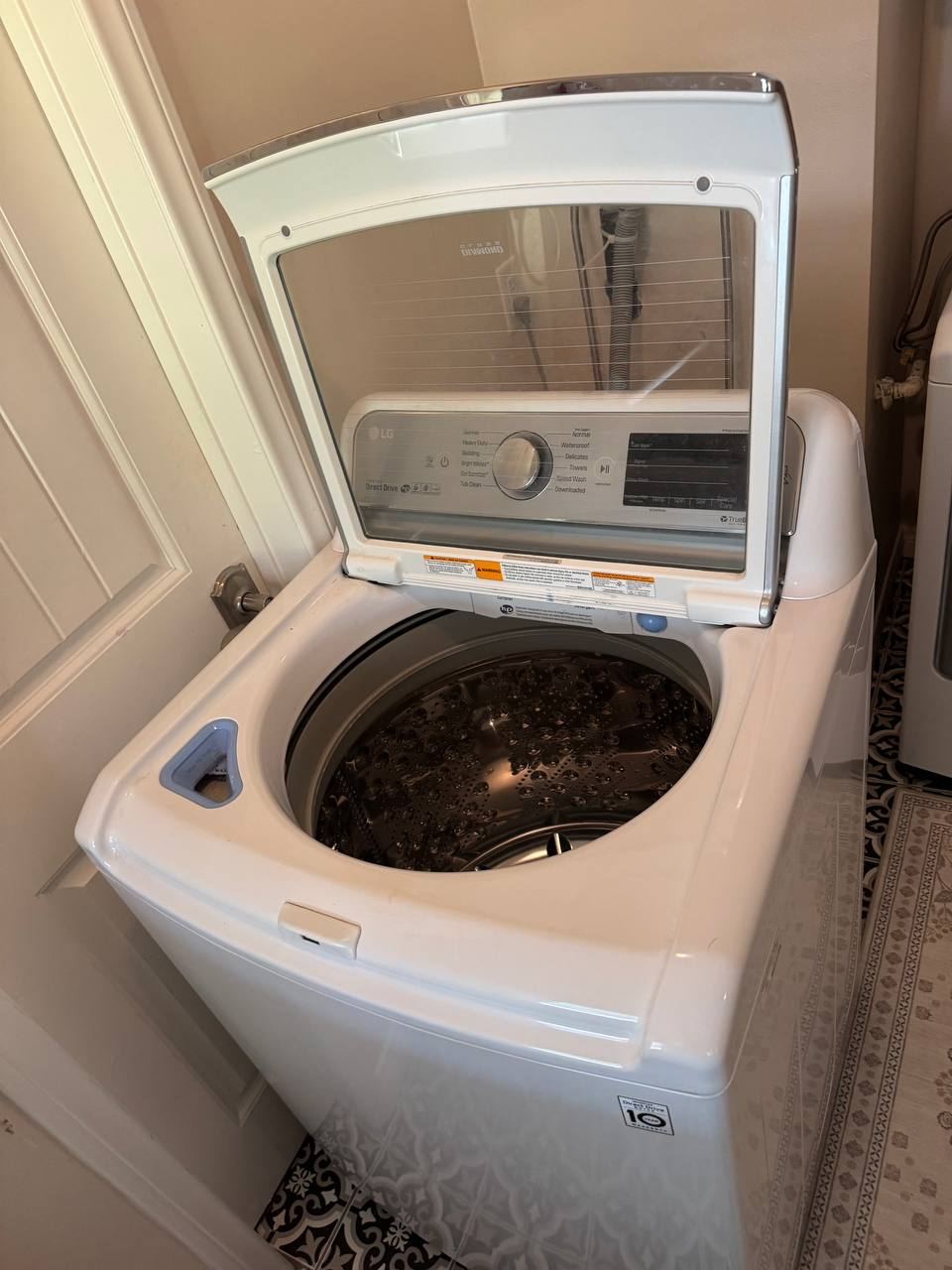
A washer that fills and washes but leaves the drum full of water is a drain problem, and the drain pump is the first suspect. Before the pump gets condemned, the filter in front of it gets opened, because on front-load machines it collects coins, hair pins and the occasional sock, and a blocked filter looks exactly like a dead pump.
No spin with an empty drum is a different fault. On front-loaders it is often the door lock assembly, since the machine will not spin unless it is certain the door is latched. On top-loaders it depends on the drive. A belt driven machine loses spin at the belt or the lid switch. A direct drive machine loses it at the lid lock, the motor coupler or the shift actuator that moves the drive between wash and spin.
Leaks and bearings
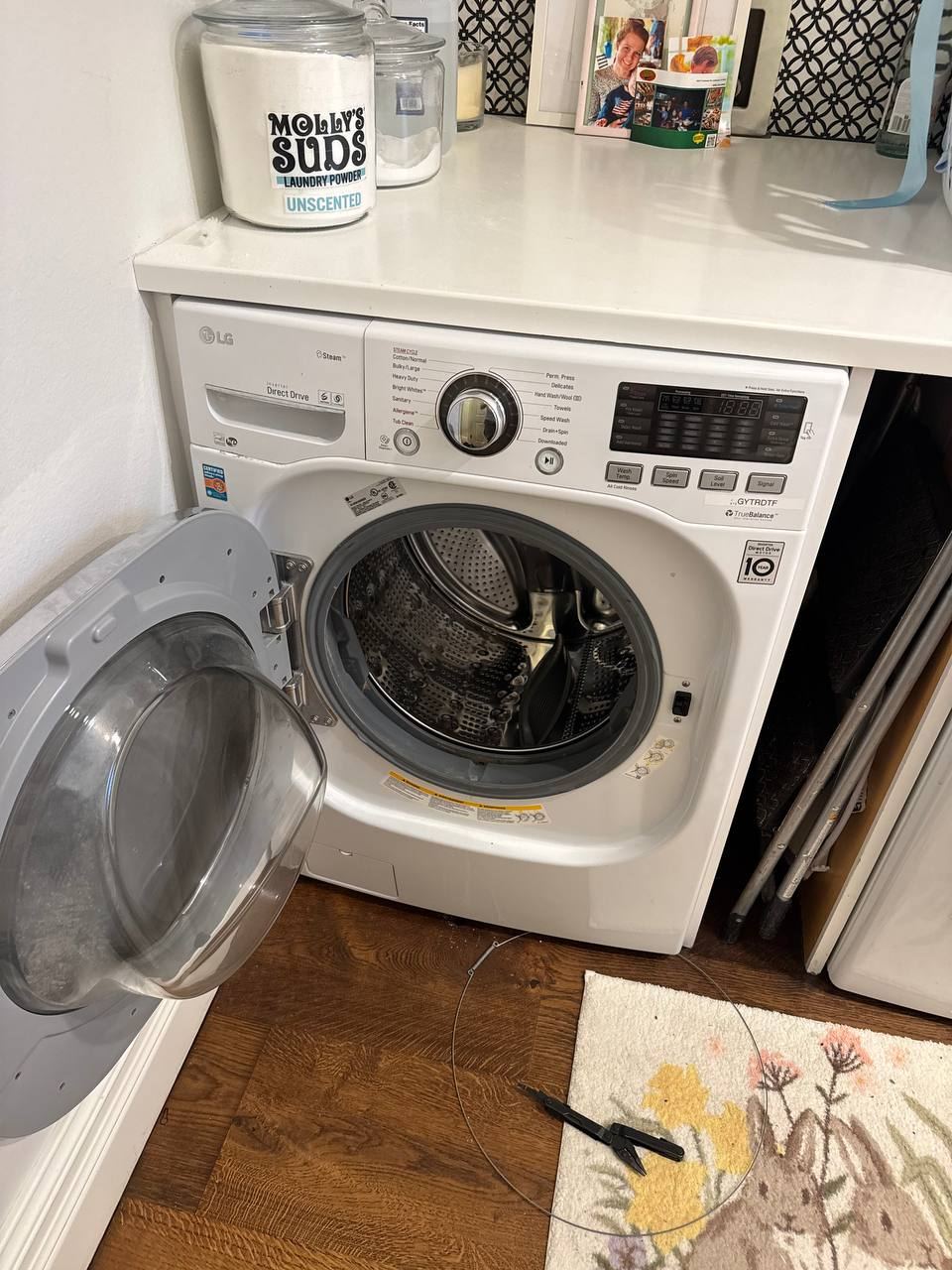
- Water at the front of a front-loader usually means the door boot is torn, and the tear is usually at the bottom where the coins sit
- Water at the back is usually a hose clamp or the inlet valve, both cheap
- A grinding roar that rises with spin speed is often drum bearings, though an object trapped between the drum and the outer tub sounds much the same and costs far less to deal with, so that gets ruled out first
What you can check first
Open the pump filter, usually behind a small panel at the bottom front, and have a towel ready. Check the drain hose behind the machine for a kink, which is what stops a drum from emptying after the machine has been pushed back against the wall. A hose pushed too far down the standpipe causes the opposite complaint, a tub that keeps losing the water it just filled with, so the cycle runs long and the wash looks dry. Run one cycle with nothing in the drum to see whether the noise is the machine or the load.
Stacked pairs and closet installs
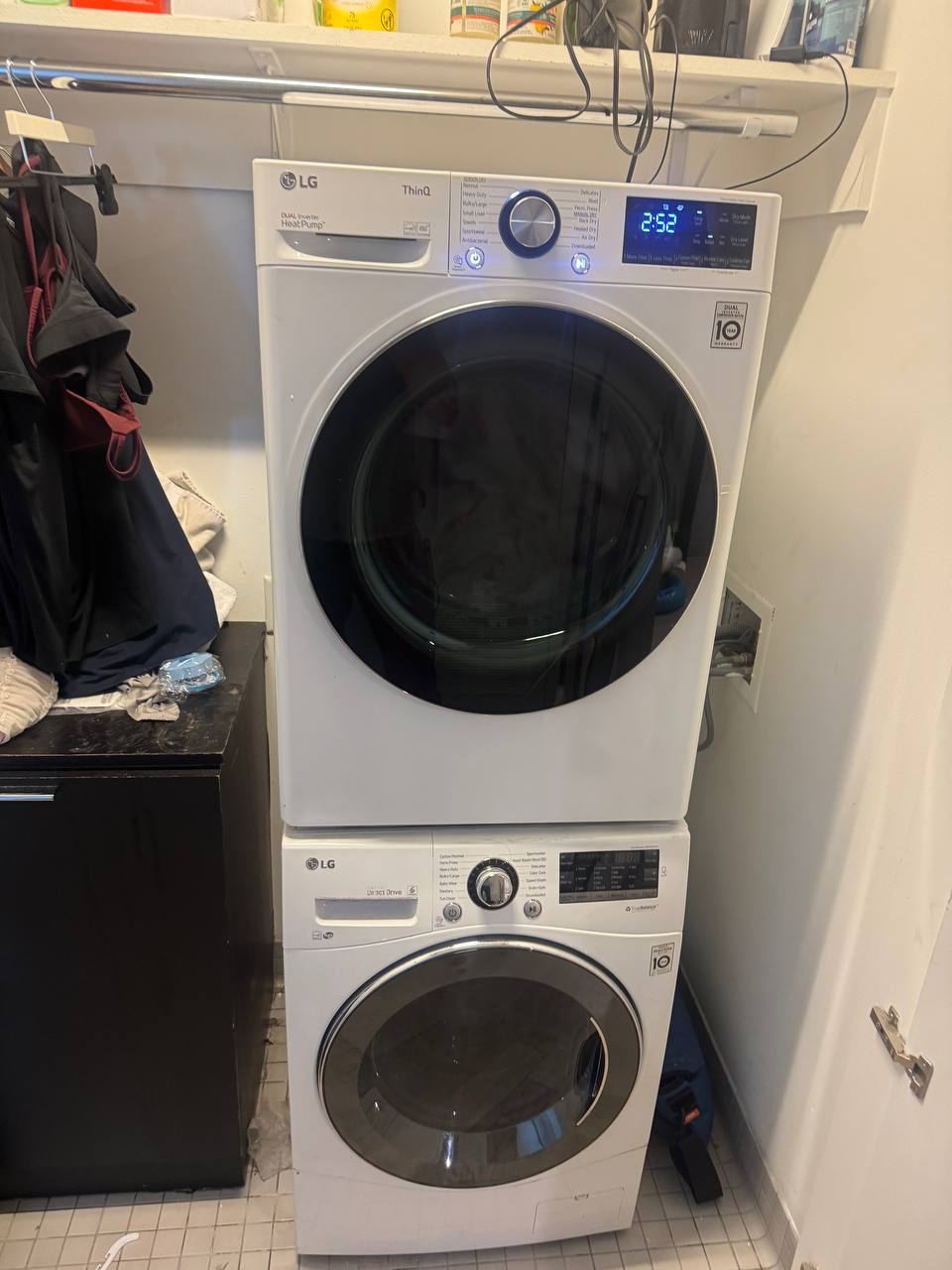
A stacked laundry pair changes the job before any part is named. The washer sits under the dryer, the two are held together by a stacking kit or a factory frame, and closet doors usually clear the front panel by an inch or two. Reaching a drain pump or a door boot on that installation means unstacking the dryer first, which is a two person lift in a space designed for one.
Say so when you call. It changes what we bring and how long the visit takes, and it is often the difference between finishing that day and a second trip.
The same applies to a washer built into cabinetry or wedged between a wall and a water heater. If the machine cannot be pulled forward, the back of it cannot be inspected, and the back is where the inlet valve, the supply hoses and the drain connection live.
Laundry in the garage
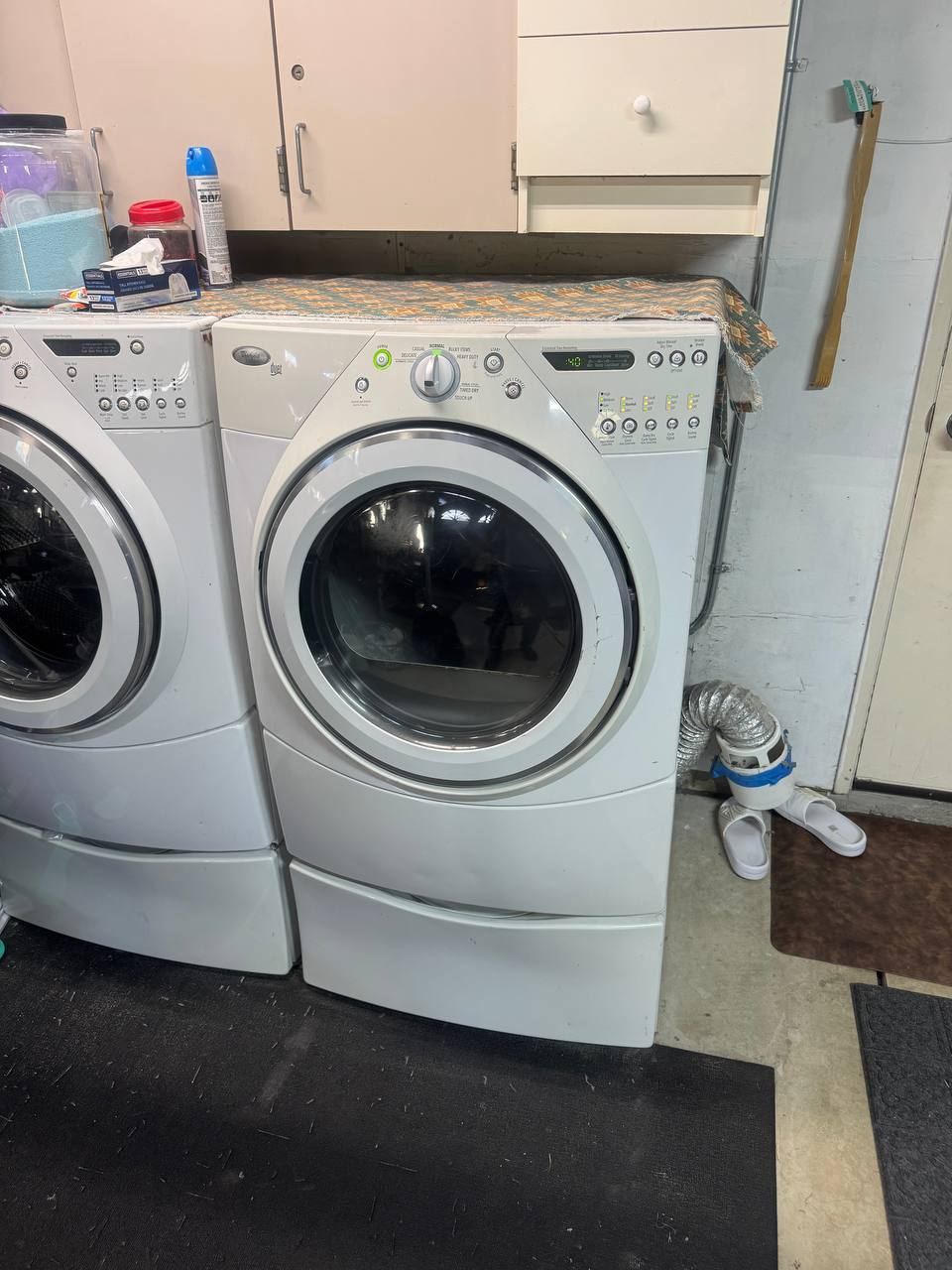
Most laundry pairs we see in the West Valley live in the garage, and that spot has its own failure pattern. A garage slab is sloped toward the door on purpose and it is rarely a clean plane, so the four feet get wound out to different heights at install and any settling after that puts the machine back out of true. A washer resting on three feet walks during spin and trips its own imbalance detection, which reads to the owner as a broken machine.
Garage air is also dusty and the space is unconditioned through a Valley summer. That does not break a washer by itself, but it shortens the life of anything with a bearing in it, and it is why garage machines usually sound worse than kitchen machines of the same age.
Check with a bubble level on the top panel, front to back and side to side, then press down on one front corner and the opposite one. Any rock means a foot is not carrying weight.
Detergent, odor and the door boot
A front loader that smells is usually being asked to work with more detergent than it can rinse away. These machines use a fraction of the water an older top loader used, so a dose that once disappeared now stays behind as residue in the boot fold, the dispenser and the drain hose, and it holds moisture where mold grows.
Cut the dose, use detergent labeled for high efficiency machines, and leave the door and the dispenser drawer open between washes so the boot dries. Wipe the bottom of the boot fold, which is where water sits and where tears start. None of that is a repair, and it clears the complaint often enough to be worth trying before anyone books a visit.
Where the self-help stops
Unplug the machine before opening anything, and stop at the cabinet. Behind the front panel of a front loader the drum hangs on springs, the counterweights are concrete, and the door boot has to seat in an exact position or the machine leaks quietly into the floor. Water and line voltage share that space.
The other line is the supply hoses. A hose that has gone hard or blistered is a flood waiting for a day when nobody is home, and replacing it is cheap. Shut both taps if the machine will sit unused for a week.
What we see in West Valley laundry rooms
Two things come up constantly. The first is the second hand pair that arrived without its manual, sometimes with the shipping bolts still in the transit position. The second is a machine whose pump filter has never been opened, because nobody told the owner it exists. Both are five minute findings that look like a serious fault from the outside.
We work on washers across Canoga Park, Winnetka and Woodland Hills, and the dryer half of the pair is on dryer repair. The two symptom walkthroughs are washer will not drain and washer will not spin.
Questions we get
Front-load or top-load, does it change the repair?
Yes, quite a lot. Front-loaders fail at the door boot, the door lock and the bearings. Top-loaders fail at the lid switch or lock, then at the drive, which is a belt on older machines and a motor coupler or shift actuator on direct drive ones. The diagnosis path is different from the first minute.
The machine walks across the floor. Is that a repair?
Check the feet first, because a machine standing on three of them travels. Worn shock absorbers are the next suspect and the one that needs parts. Shipping bolts left in the transit position give a different signature, hard banging in place rather than a machine that walks.