Water on the floor in front of a washer sends most people straight to the rubber seal, and they usually mean the part they can see. Most of the boot is behind the front panel, which is why a torn one can put water on the floor while the door stays dry, and why the visible check that seems to clear it does not.
One piece of rubber, two jobs
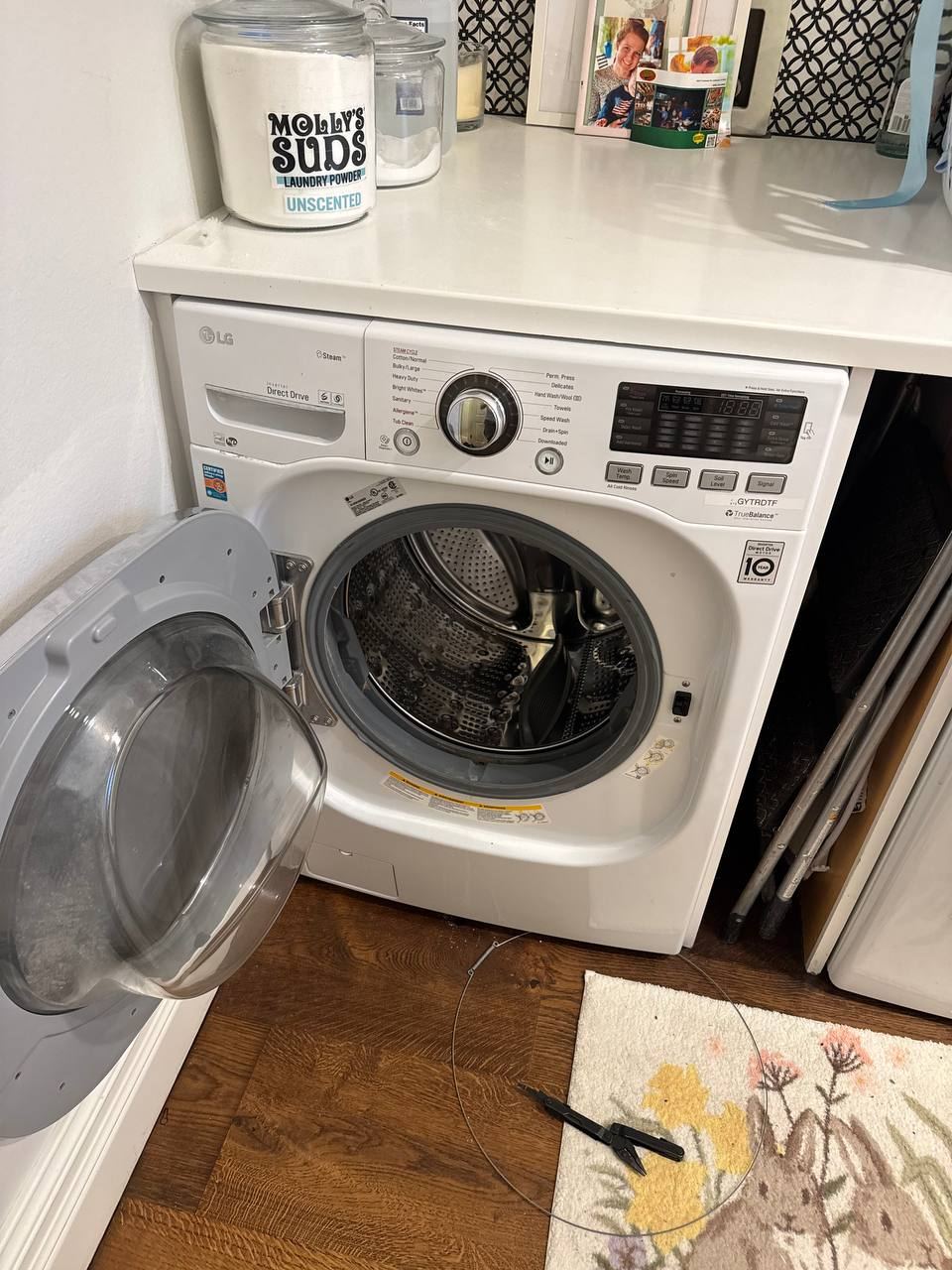
The boot, also called the bellow, is a rubber sleeve bridging two things that move differently: the front panel of the cabinet, which stays still, and the outer tub behind it, which does not. Its outer edge is clamped to the front panel by a spring band, the wire ring lying on the floor in the photo above. Its inner lip faces you, and that is the surface the door glass presses against when the door shuts.
So one part is doing two separate jobs, and only the second one happens where you can see it. Whirlpool describes that second job plainly: the door glass seals against the rubber seal, and dirt or deposits can prevent a proper seal and cause leaks. A clean, intact boot can leak if something is lying across the face it seals against.
Where the water lands narrows it down
Run a normal cycle with a dry paper towel laid along the floor at the foot of the machine. Watch the door during the cycle, then read the towel at the end.
- Water running down the outside of the door glass. The glass to rubber joint is not closing. This is the group where cleaning fixes it most often
- Water at the floor with the door and the glass dry. The water is getting out inside the cabinet rather than through the doorway. That covers a hole anywhere in the sleeve section of the boot, which sits behind the front panel, and it covers hoses, the pump and the drain path. Dry glass does not clear the boot
- Water around the dispenser drawer or below it. Whirlpool lists a clogged dispenser and a drawer that is not fully closed as their own causes, and says it could leak from around the dispenser area onto the floor. Cheap to rule out, so rule it out early
- Water only in the bottom fold of the boot, floor dry. A fold holds water. Whirlpool's instruction is to check the seal after each use and make sure the drainage holes are not blocked or clogged
Treat that as an order to look in rather than a verdict. Overloading and a machine out of level are on Whirlpool's list too, and neither announces itself by where the water lands.
The check that costs nothing
Wipe the sealing face of the rubber and the inside of the door glass with a damp cloth, then look under the boot rather than at it. Whirlpool's wording is to gently pull back the seal to inspect all areas under the seal and to check for foreign objects, and that over time lint, dirt or even small items like coins can get trapped in the rubber gasket.
Coins, hairpins, buttons and screws turn up in that fold constantly and mostly just sit there. The one worth finding early is an underwire out of a bra: thin, stiff and sharp at the end, it works its way into the rubber while the drum turns. That is a common way for an intact boot to stop being intact.
The load, and the corner of it in the doorway
Whirlpool's guidance is to avoid tightly packing the washer and to make sure all items are pushed into the basket, because clothing outside the basket could get stuck inside the door seal or prevent the door from sealing properly and cause the washer to leak. Both halves of that happen. A tightly packed drum does it, and so does one corner of one item on an otherwise sensible load. A bath mat, a duvet or a fitted sheet is bulky enough to spring back into the doorway after the door shuts, and a single fold of towel across the lip can hold the door off the boot face.
The tell is that it happens on some loads and not others. A leak that shows up with bedding and never with a normal wash is pointing at the load before it points at the rubber.
Suds get past a seal that is in good condition
Whirlpool states that non-HE detergent, or more than the manufacturer's recommended amount, can cause excessive suds, which can lead to the washer leaking, draining concerns, and/or poor rinsing performance. Foam does not need the gap that liquid water needs. It fills the tub and takes whatever path is weakest, most often the dispenser drawer, and it can show up at points on the door that stay dry on a normal load.
There is a clean way to test it. Run a rinse and spin on an empty drum with no detergent. Foam in an empty machine usually means detergent residue is still in the system, and the dose is what to change before anything gets replaced. Whirlpool also asks that single dose packets go into the basket before the clothes and never into the dispenser drawer, an instruction written for its own machines, so check the manual for yours.
When the boot is actually the part
Whirlpool's hedge here is worth keeping intact: if you notice signs of wear, such as cracks or tears, it may be time to replace the gasket. Not every mark on a boot is a leak path, and rubber that looks tired can still seal.
Dry the boot, then work around the whole circumference under a light, pulling the folds apart. Debris collects low, so the bottom fold is where objects have been riding. A hole higher up the sleeve only passes water while the drum is turning, which is why it reads as dry on a quick look and still wets the floor every cycle.
Before going any further than the doorway, unplug the washer at the wall and close both supply taps. Behind the front panel are the door lock, the harness and the control board, all live at wall voltage, and this is a job being done because there is already water on the floor. Replacing a boot is not a wipe down: the outer edge comes off the front panel first, which is what the spring band in the photo is, and on most machines that means going through the panel and past the door lock assembly to reach it.
In a garage this hides for weeks
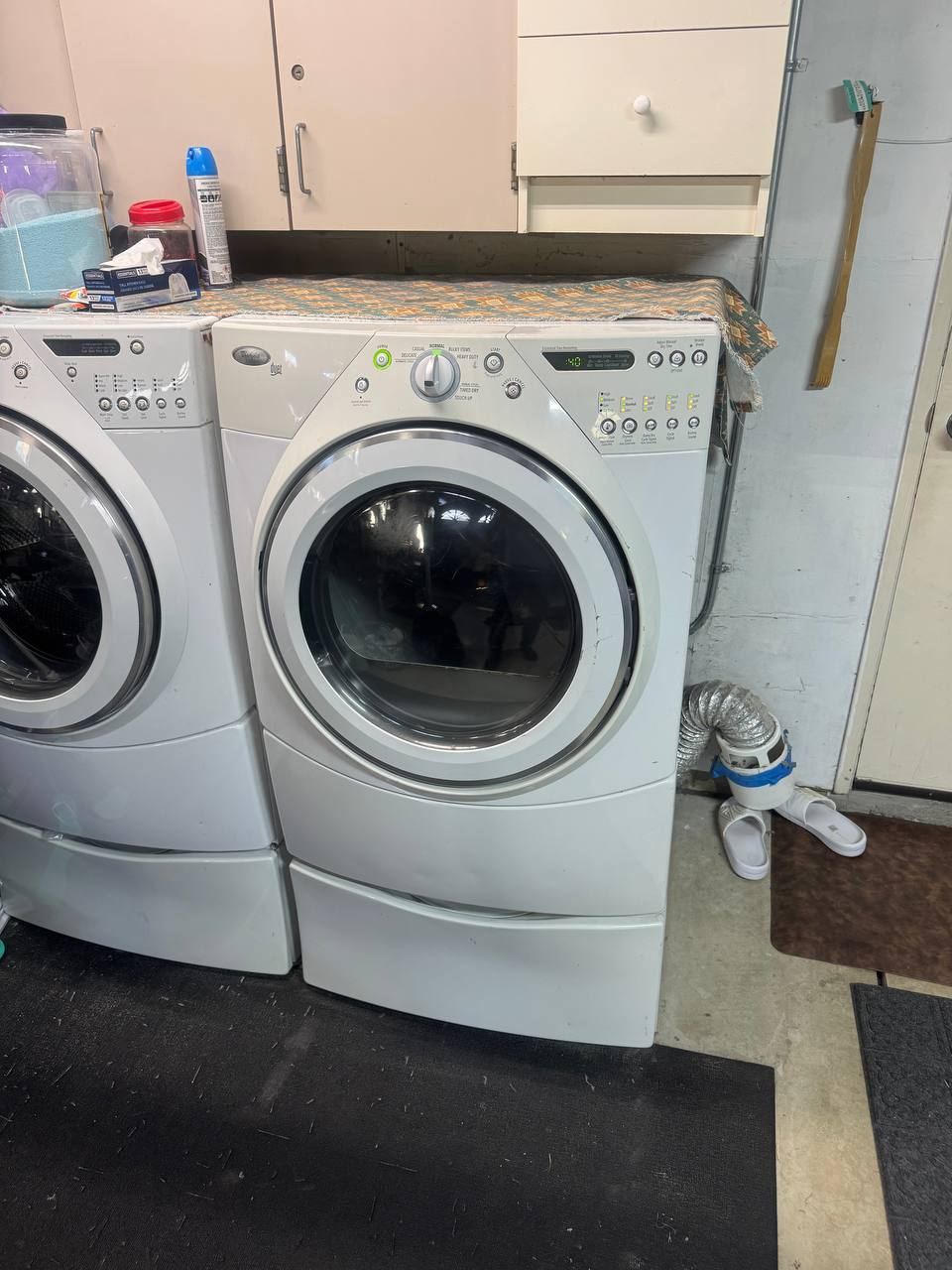
A lot of Valley laundry lives in the garage, and a slow leak behaves differently there. On a slab there is no hollow sound underfoot and no swelling baseboard, and nobody walks past the front of the machine daily the way they do in a hallway. Add a pedestal and the drip has a shelf to run along before it reaches open floor. Which is the argument for the paper towel rather than a glance.
Where to stop
Do not run the machine with the front panel off to watch where the water comes from. Getting at the boot clamp means going past the door lock, and that lock is part of what keeps the drum from turning with the door open. Looking harder at that point makes things worse rather than clearer.
The other stopping point is the floor rather than the machine. Water that has been sitting under a washer for a while stops being an appliance question.
If the drum is holding water rather than losing it, the list behind that is a drain fault, and a drum that fills but never gets the water back out belongs with a washer that will not spin instead. We handle washer repair across Canoga Park and the rest of the West Valley. Manufacturer guidance above comes from Whirlpool's pages on leaking from the front and on dripping water from the door.
Questions we get
There is always water sitting in the bottom of the rubber seal after a cycle. Is that a leak?
Not by itself. The bottom of the boot is a fold, and a fold holds water. It matters when the floor is wet too. Whirlpool's instruction for its front load washers is to check the seal after each use and make sure the drainage holes are not blocked or clogged, so start there rather than with a new gasket.
Can too much detergent really make a washer leak?
Whirlpool's wording is that using non-HE detergent or more than the recommended amount can cause excessive suds, which can lead to the washer leaking, draining concerns, and/or poor rinsing performance. Foam does not need the gap that liquid water needs, so test it with a rinse and spin on an empty drum and no detergent.
The floor is wet but the door and the glass are dry. Does that clear the boot?
No, and this is the one people get backwards. Most of the boot sits behind the front panel, so a hole in that part of it drains down inside the cabinet and reaches the floor without ever touching the door glass. Dry glass rules out the glass to rubber joint. It does not rule out the boot.