A different kind of kitchen
Calabasas is an incorporated city in Los Angeles County rather than a Los Angeles neighborhood, and many of its homes have kitchens built around built-in appliances: refrigerator and freezer columns behind wood panels, integrated dishwashers, professional ranges and wall ovens. Our shop is at 6950 Remmet Ave in Canoga Park, a short drive on the 101 or over Valley Circle, so same-day visits in Calabasas are often possible. We service Sub-Zero, Wolf, Viking, Thermador and Bosch, along with the everyday brands, and we are open Sunday from 7:00 to 19:00.
Why replacing a built-in is rarely simple
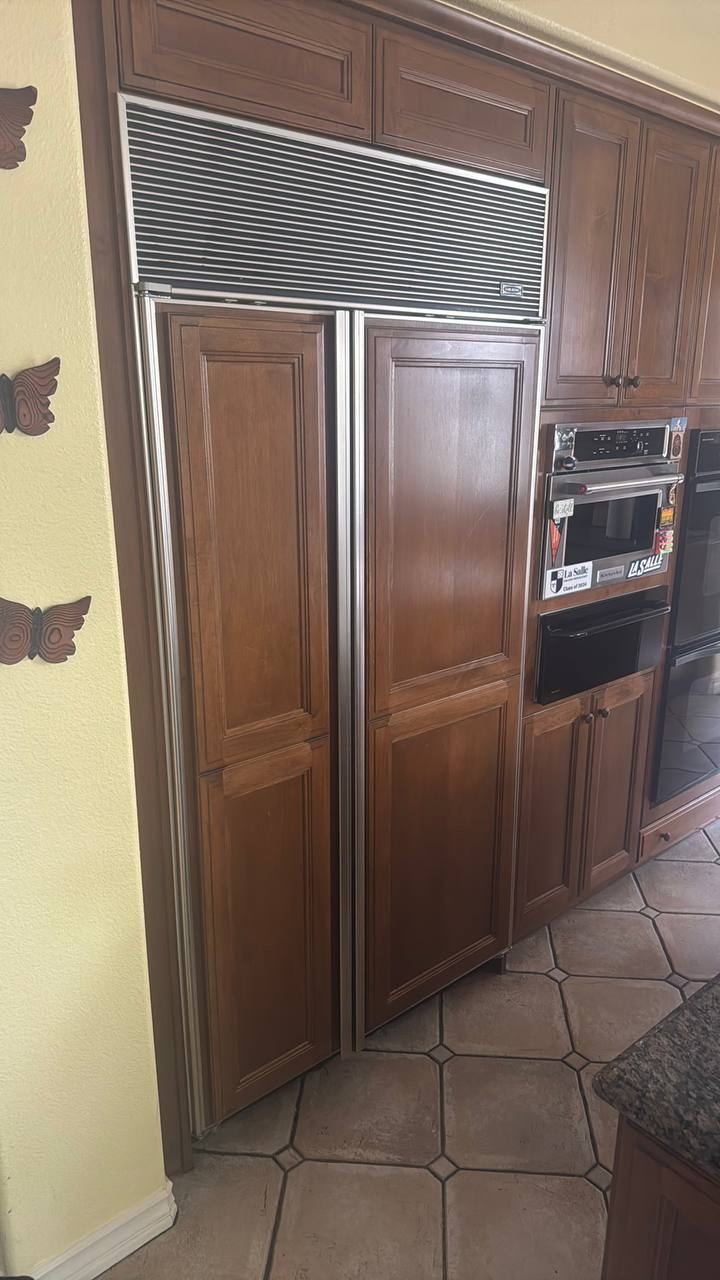
When a built-in fails, replacing it is often a cabinetry project rather than a simple delivery. Fitting a new unit can mean matching the cutout, the panels and the trim kit, plus the water line on models that have one. That is why a repair that would be marginal on a freestanding unit often deserves a closer look on a built-in, and why we diagnose before replacing any board.
The grille on top of a built-in refrigerator
On Sub-Zero Classic built-ins and many similar units the condenser sits behind the grille at the top, not behind a kick plate at the floor. Sub-Zero's guidance for its Classic series (BI) says to clean the condenser with a vacuum cleaner or soft brush, and that failure to clean the condenser could result in temperature loss or mechanical failure or damage. Its steps start with pressing Power on the control panel to turn the unit off, then holding the center of the grille assembly at the bottom and lifting and rotating the grille up to expose the condenser area. Sub-Zero's support pages list more than one cleaning interval, so follow the Use and Care Guide for your model.
When a built-in runs constantly or drifts warm, we check the condenser before anything in the sealed system. The general version of that sequence is in a refrigerator that runs constantly.
Two systems in one cabinet
Sub-Zero describes its dual refrigeration this way: the freezer has its own dedicated sealed system run by a single compressor, and the fresh food side never shares its humid air with the freezer. That design changes how a warm fresh food section is diagnosed, so we confirm how a unit is built before we start on it. More on these units is on our Sub-Zero repair page.
When the door loses its suction
Sometimes the door of a built-in no longer has the suction it used to. Sub-Zero says the loss of suction should not present an issue as long as there are no visible differences in the unit's performance, such as temperature change, condensation build-up, frost or ice build-up, service messages, or error codes. Its checklist includes: verify the condenser is clean, inspect the door gasket for tears or ripples, make sure nothing inside is holding the door open, and level the unit per the installation instructions, because if a product is not installed properly, the door may not seal. If a weak seal does come with frost, the pattern is explained in frost on the freezer back wall.
A Wolf oven that stops heating after self-clean
Wolf lists two causes for an electric oven with no heat after self-clean: the electrical supply interrupted during self-clean, or a thermal cutout tripped due to extreme temperature. Its first step is to turn the home circuit breaker to the unit off for 30 seconds, then back on, and retest. Wolf also notes that LO on the display during preheat is not an error code and indicates that the oven is currently preheating. If the fans run but the oven does not heat, Wolf says service is necessary. Temperature problems short of a dead oven are covered in an oven that does not reach its set temperature.
Built-in dishwashers and the filter at the bottom
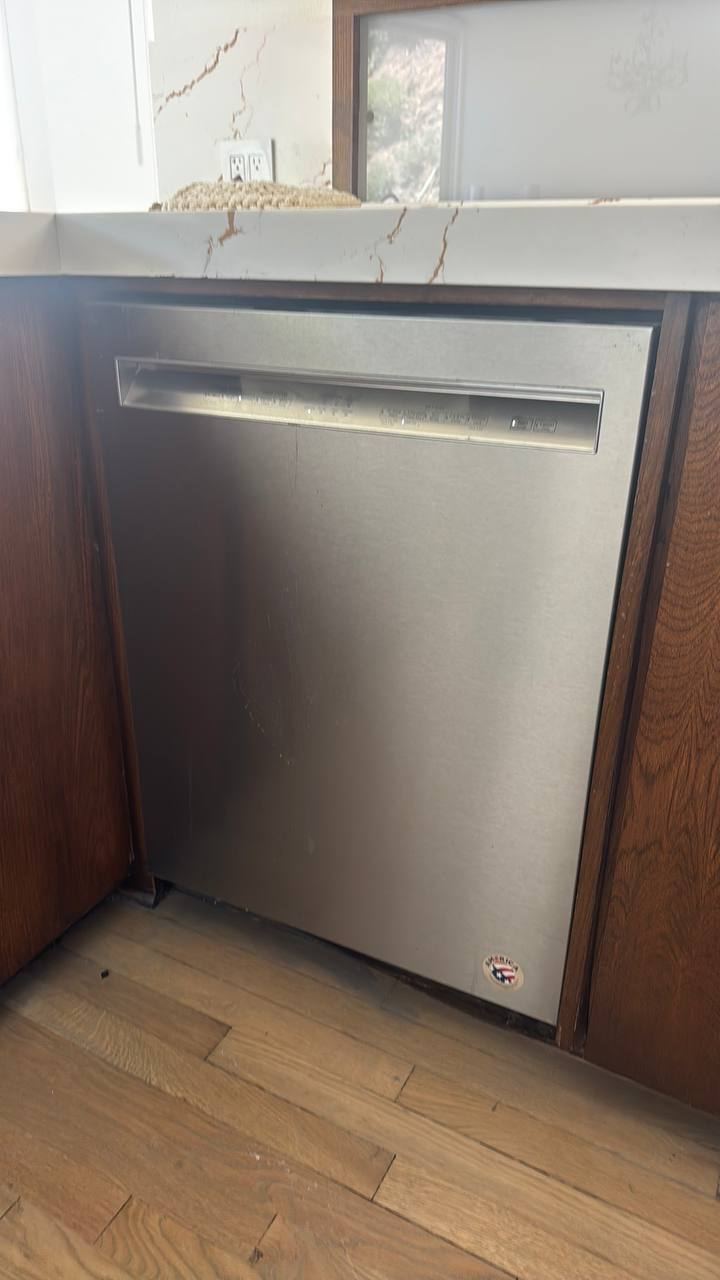
Food debris collects in the filter at the bottom of the tub. Bosch says the filter needs to be cleaned regularly to avoid overflow. Its steps: remove the lower rack and spray arm, twist and pull the filter out with the mesh screen, and wash it under running water with mild soap and a soft brush. Bosch says to review your owner's manual to learn how to remove the filter. If water stays in the bottom after a cycle, go through a dishwasher that will not drain before assuming the pump has failed.
Front-load washers that leave water in the drum
When a front-load washer finishes with water still in the drum, Whirlpool points first to the drain pump filter, on models that have one, which it says may be clogged with dirt, lint, or other items and should be cleaned on an occasional basis. On its models with a storage drawer at the base, opening that drawer reveals the filter. Whirlpool's steps: place a broad, flat container under the filter, drain the black hose into it, and repeat if necessary until all the water has drained; then remove the filter by turning it counterclockwise, take out large clumps of lint by hand and rinse off the rest. It also says the steps for reaching the drain pump depend on your model number, so check the manual for yours.
The drain hose matters as much as the filter. Whirlpool says the hose should not extend more than 4.5 inches into the drainpipe or laundry tub, because drained water can siphon back into the washer, and that the hose should not be sealed into the drainpipe with tape. The longer version of this symptom is in a washer that will not drain.
Dryers that need two cycles
For a dryer that heats but still runs long, Whirlpool says the likely cause is a vent issue or restricted airflow. Its checks start with the lint screen, which it says to clean after every use, and then the outside exhaust hood: hold your hand under it with the dryer running, and if the air movement is less than a hair dryer on high speed, clean the lint from the entire length of the system. GE adds that the vent should be rigid metal or flexible metal only, not plastic flexible ducting, and that if there is not a strong airflow at the wall cap, it is typically a sign the duct is obstructed.
GE cautions not to operate a gas dryer without the vent, because carbon monoxide fumes could enter the room. Separately, ventless dryers, such as heat pump models, do not exhaust outside, so these vent checks do not apply to them. The full sequence is in a dryer that takes two cycles.
Where a homeowner should stop
Anything holding refrigerant is not a driveway job. The EPA prohibits intentionally venting refrigerant while servicing, repairing or disposing of refrigeration equipment. Opening a sealed system also takes recovery equipment and EPA Section 608 technician certification. Anything involving gas past cleaning a burner cap belongs to a technician, and so does work inside a panel with power still connected. Most of what comes before those lines needs little more than a vacuum, a flashlight and the owner's manual.
What we fix in Calabasas
- Refrigerator repair in Calabasas
- Washer repair in Calabasas
- Dryer repair in Calabasas
- Dishwasher repair in Calabasas
- Oven and stove repair in Calabasas
- Microwave repair in Calabasas
- Garbage disposal repair in Calabasas
- Ice maker repair in Calabasas
Questions we get
Do you charge for the visit in Calabasas?
We tell you the cost of the visit when you call, before anyone comes out, and the price of the repair is agreed with you before any work starts. Nothing is decided after the fact.
Are you open on the weekend?
We are open Sunday from 7:00 to 19:00 and closed Saturday.
Can you come out the same day?
Usually yes in Calabasas. Call early in the day and the odds are much better.
Why does my dryer take two cycles to dry?
Whirlpool says that if a dryer is heating but still has long dry times, the likely cause is a vent issue or restricted airflow. Its checks start with cleaning the lint screen after every use and feeling the airflow under the outside exhaust hood. Ventless dryers, such as heat pump models, do not exhaust outside, so these checks do not apply to them.
Why has my built-in refrigerator door lost its suction?
Sub-Zero says the loss of door suction should not present an issue as long as there are no visible differences in the unit's performance, such as temperature change, condensation build-up, frost or ice build-up, service messages, or error codes. Its checklist includes a clean condenser, a door gasket with no tears or ripples, nothing inside holding the door open, and a unit leveled per the installation instructions.