Water standing in the tub after a finished cycle means the drain path is blocked between the sump and the sink drain, or the pump is not turning. Six candidates, ordered by cost: a clogged filter, a disposer knockout plug never removed, a blocked air gap, a kinked drain hose, debris in the pump, and a failed pump or control board. Bosch names the first and fifth together as the most common, stating that the most common reason for a dishwasher to stop draining is food debris clogged in the filter or the water pump. Most of the six cost nothing but ten minutes.
Is the water actually abnormal?
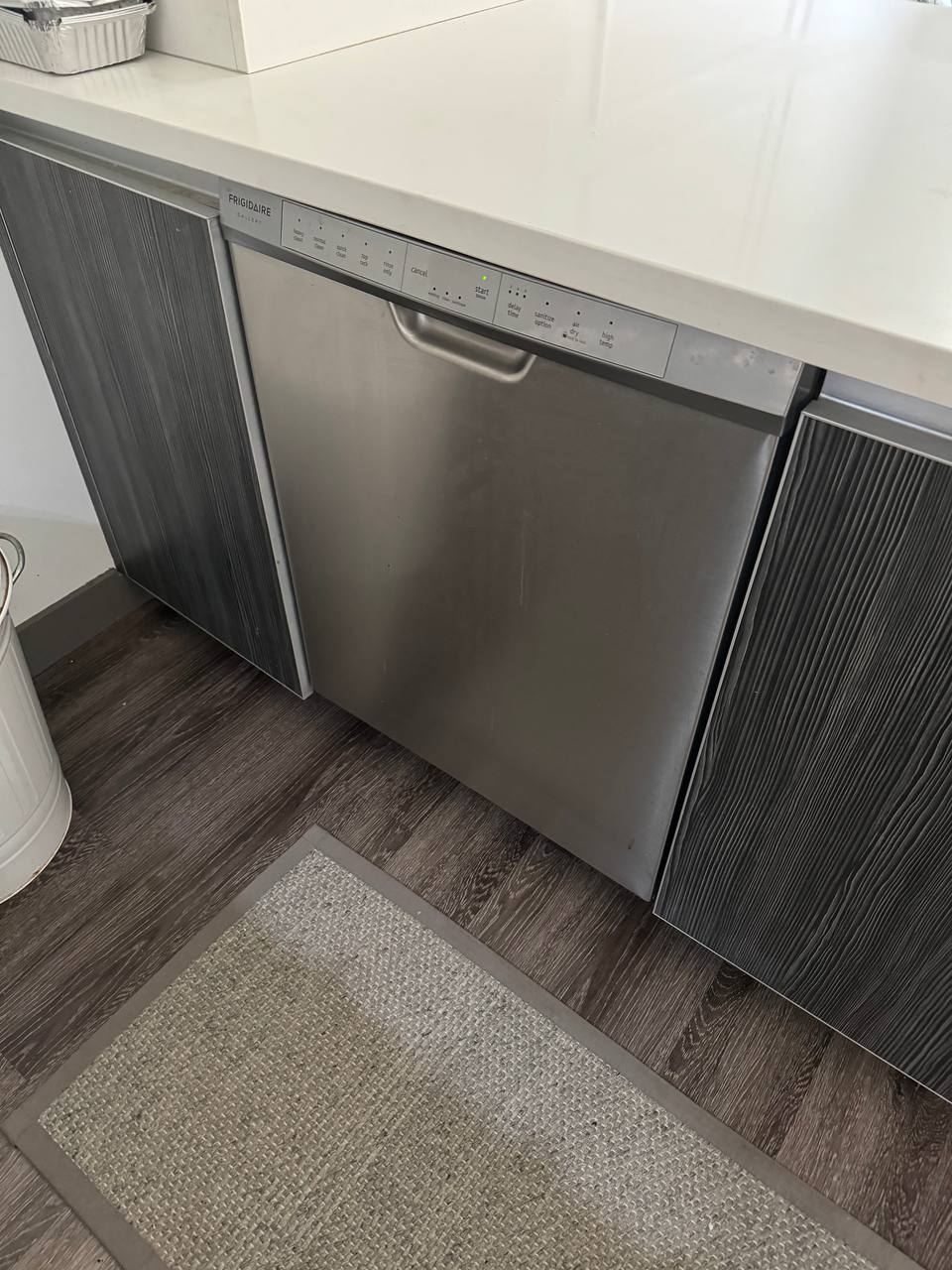
Check this first, because a fair number of these calls end with a machine behaving correctly.
Many dishwashers retain a small amount of water in the sump below the filter by design, which keeps the drain pump seal wet and stops it hardening. What you should not have is visible standing water above the filter at the end of a completed cycle, deep enough to slosh when you open the door.
One false alarm is worth ruling out. If the cycle was interrupted, by the door opening mid-cycle, a power blip, or someone pressing cancel, water sits in the tub and the machine is fine. Start a drain cycle and listen. If it pumps out normally, nothing is wrong.
How do you clean the filter, and how often?
The filter sits in the floor of the tub, usually a cylinder with a coarse screen around it. On most machines the cylinder turns counterclockwise and lifts straight out, and the flat screen underneath lifts out separately.
Pull both pieces and wash them in warm soapy water with a soft brush, paying attention to the fine mesh rather than the visible chunks. What kills drainage is a layer of grease and starch closing the mesh, and it does not look dramatic. Bosch recommends cleaning the filter every few months, and more often than that if the machine runs daily or the household scrapes plates lightly.
With the filter out, look into the sump. Bosch's instruction is to remove the pump cover underneath and clear debris and standing water with a sponge, with a warning that debris can be sharp. Broken glass, fruit stickers and small bones are what we find. Use a paper towel rather than bare fingers.
Reinstall the flat screen first, then the cylinder, and turn it until it locks. A filter left unlocked sends debris straight into the pump, which converts a free job into a paid one.
Was the disposer knockout plug ever removed?
This one costs nothing and gets diagnosed as a dead pump.
Built-in dishwashers usually drain through the garbage disposer. A new disposer arrives with the dishwasher inlet sealed by a factory plug, because plenty of kitchens have no dishwasher and the port would leak. The installer is supposed to knock it out before connecting the hose. Whirlpool states the point plainly, that removing the knock-out plug is critical for draining the dishwasher and calls it a common misdiagnosis for a machine that will not drain.
The tell is timing. If the dishwasher drained fine last month and the disposer was replaced since, that is your answer. Same if the machine is newly installed and has never drained once. A clogged disposer produces the same symptom without the plug being involved, so run it with cold water first: if the sink drains slowly, the dishwasher was never going to empty into it.
Is the air gap blocked?
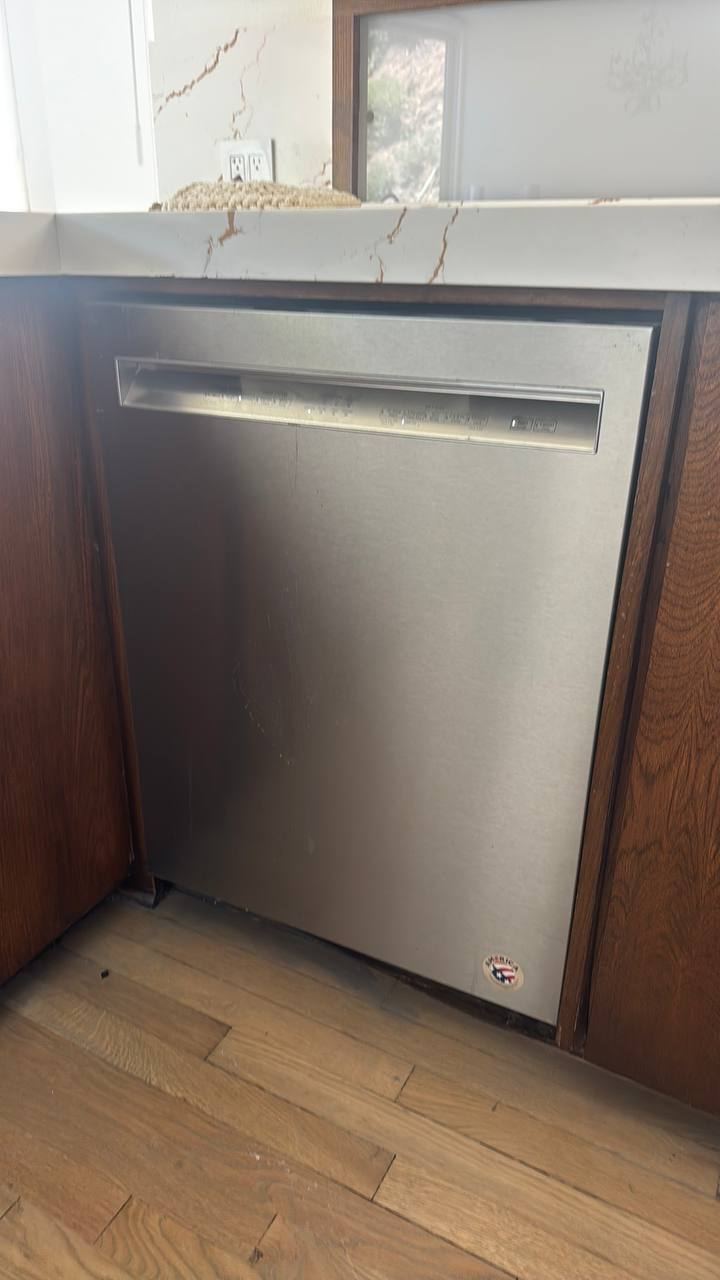
In California kitchens there is usually a small chrome or plastic cylinder on the sink deck beside the faucet. The drain hose runs from the dishwasher up into it and back down to the disposer, so sink water cannot siphon backward into the machine.
It collects the same debris everything else in this path collects. The cover lifts off by hand and the plastic insert underneath comes out with a gentle pull. Rinse both, clear the two ports with a bottle brush, and put it back. A partially blocked air gap slows drainage. A fully blocked one either stops it or pushes dirty water out from under the cap and across the counter.
Whirlpool's instruction is that the hose must be installed with a proper high loop or connected to an air gap as required by local codes, and that a hose sitting too low or kinked lets water flow back into the tub. Read the last clause carefully, because here the local code decides: in California the air gap is required rather than optional, and a high loop on its own does not satisfy it. A kitchen with no air gap was installed wrong, and looping the hose high under the countertop improves drainage without making the installation correct. Most cutouts around here were added to a kitchen built before dishwashers were standard, which is where the shortcuts come from.
Is the drain hose kinked?
Open the cabinet under the sink and follow the hose with your hand from the sink connection back toward the dishwasher.
You are feeling for three things. A sharp bend where the hose passes through the cabinet side, which happens when the hole was drilled in the wrong place. A crushed flat section where the machine was pushed hard into the cutout. And a section resting under stored bottles and buckets, which over a few years takes a permanent set. Check the clamp at the disposer inlet while you are there.
What about the pump and the control board?
If the filter is clean, the sump is clear, the plug is out, the air gap flows and the hose is unobstructed, the fault is inside the machine.
Listen at the start of a drain cycle. A pump trying to run makes an audible hum or whine. Debris jammed in the impeller produces a strained buzz and no water movement, and the pump usually shuts off after a few seconds on protection. Silence when the machine should be draining points at the pump winding, its wiring, or the control board. An LG showing OE, or a Bosch showing E24 or E25, is reporting that it did not detect the water leaving. Note the code before clearing it, because it narrows the visit considerably.
This is where the job stops being free. A drain pump is a straightforward part, but reaching it means pulling the unit out and disconnecting water and power, and the supply fitting on a machine that has sat fifteen years is a common place to create a leak. That sequence is on the dishwasher repair page.
What can you check in ten minutes?
Run a drain cycle to rule out an interrupted program. Pull and wash the filter and clear the sump. Run the disposer with cold water and confirm the sink drains. Lift the air gap cap and rinse the insert. Follow the drain hose for a kink. If the machine was installed or the disposer replaced recently, check the knockout plug before any of that, because it blocks everything downstream and no amount of filter cleaning will help.
When should you stop and call?
When there is water on the floor rather than only in the tub, because a leak and a drain fault are different problems and the first damages cabinetry while you troubleshoot. When the machine trips a breaker. When the pump strains and the sump looks clear, since something is in the impeller housing. And when the unit is a panel-ready built-in, where pulling it out without releasing the custom door correctly is how cabinetry gets damaged.
We work on dishwashers across the West Valley from our shop at 6950 Remmet Ave in Canoga Park, and cover Winnetka, Woodland Hills, West Hills and Calabasas the same day. Hours are Monday to Thursday 7:00 am to 7:00 pm, Friday 7:00 am to 5:00 pm, closed Saturday, and open Sunday 7:00 am to 7:00 pm. We service Sub-Zero, Wolf, Viking, Thermador, Miele, Bosch, KitchenAid, Whirlpool, Maytag, GE, Frigidaire, LG, Samsung, Kenmore and Haier. Licensed and insured, BHGS #49468, verifiable through the California Bureau of Household Goods and Services. Call (818) 325-5525, price is agreed before we start. We are ASL proficient, and deaf and hard-of-hearing customers can book here.
Questions we get
Is a small amount of water in the bottom of a dishwasher normal?
A thin film in the sump below the filter is normal on many models and keeps the pump seal from drying out. Standing water you can see above the filter after a completed cycle is not normal. The test is whether a spoon laid flat in the sump area is submerged or merely damp.
My dishwasher stopped draining right after the garbage disposer was replaced. Why?
Almost certainly the knockout plug. A new disposer ships with a sealed dishwasher inlet, because not every kitchen has a dishwasher, and the installer has to knock that plug out before connecting the drain hose. Whirlpool lists this as a common misdiagnosis on new installations. If the plug is still in place, the dishwasher pump is pushing against a solid wall and nothing at all will drain.
What is the small chrome cylinder next to my faucet?
That is the dishwasher air gap. The drain hose runs up into it and back down to the disposer or drain, so dirty sink water cannot siphon back into the dishwasher. It clogs with food debris over time, and a blocked air gap will stop drainage or push water out of its cap onto the counter. The cover lifts off by hand and the insert underneath can be pulled and rinsed.