Not freezing, or freezing too much
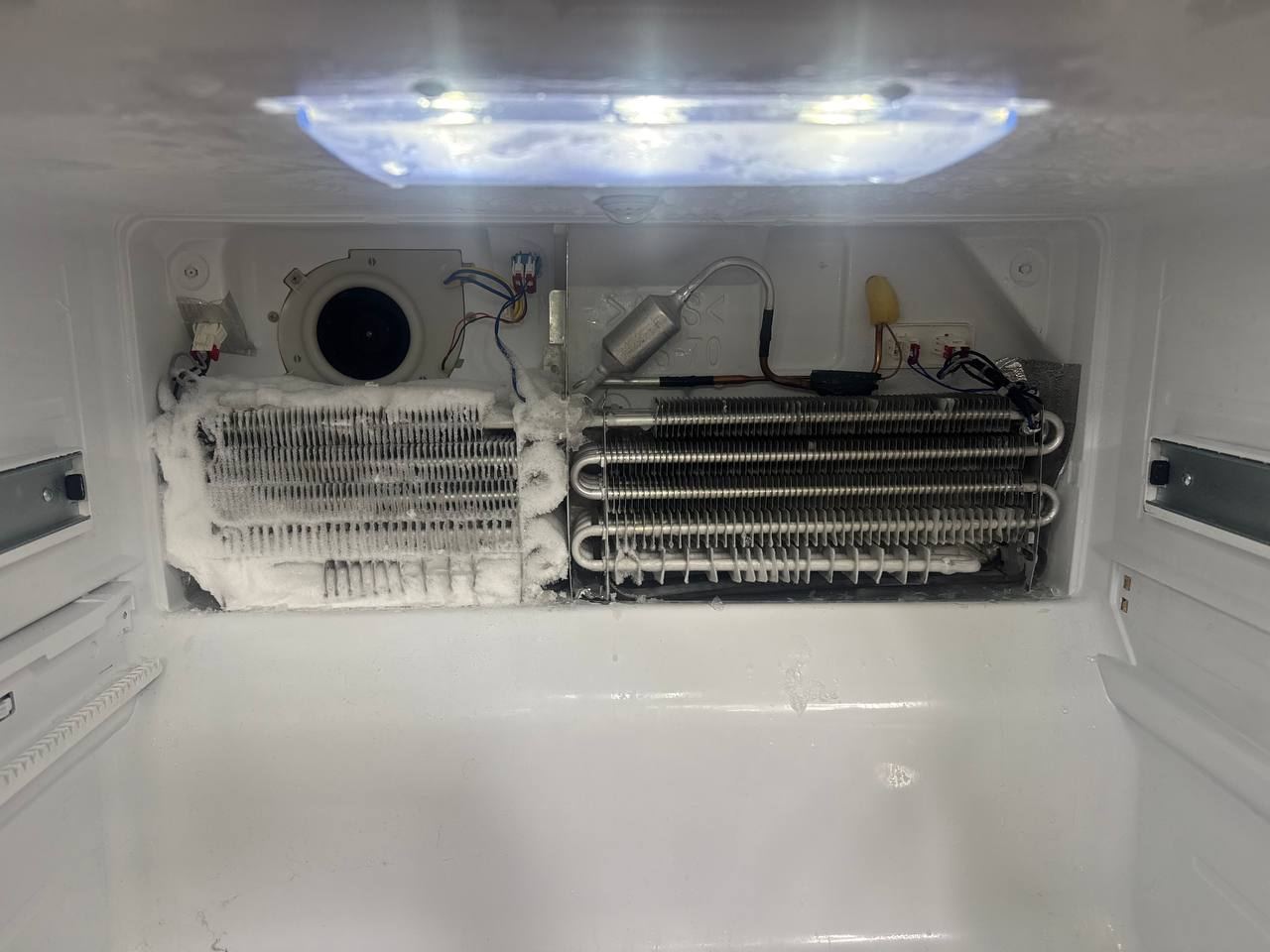
A chest or upright freezer that has drifted warm is usually one of three things. The condenser is choked with dust and cannot dump heat, which in a Chatsworth or West Hills garage in August is close to inevitable. The evaporator fan on a frost-free unit has stopped. Or the defrost circuit has failed and the coil is behind a wall of ice.
The opposite complaint, everything welded into a block of frost, usually means the door gasket has stopped sealing or the lid is being held slightly open by whatever got stacked at the front. Warm humid air gets in, and it condenses on the coldest surface it can find.
What keeps the compressor from starting
A freezer compressor that will not start usually shows one of two symptoms. It hums for a few seconds and clicks off, or it stays silent while the interior light and any cabinet fan still work. The click is the overload protector or the start relay cutting power before the motor windings overheat. That is a protective response, not the fault itself, and a compressor that keeps tripping under this protection needs a look at the run capacitor, the relay, or the windings rather than another restart.
A freezer with no compressor sound at all, no cooling, but power reaching the unit, points toward the thermostat, the wiring to the compressor, or a control board rather than the sealed system. None of this is a phone diagnosis. It takes a meter on the compressor terminals to tell a protector trip from a failed relay from a seized motor.
The evaporator fan, easy to miss
Inside a frost-free freezer, a fan pulls air across the evaporator coil and pushes it through the cabinet. When that fan motor seizes, or its blade jams against built-up frost, the compressor can keep running normally while the freezer still climbs in temperature, because cold air is not reaching the food. From the outside this looks like a refrigerant problem, and it is not one. Listening for the fan when the door opens, it should switch off, is one of the first checks on a freezer that runs constantly but stays warm.
Chest and upright freezers fail differently
A chest freezer sits low, opens from the top, and loses very little cold air when the lid opens because cold air is heavier and stays in the box. Its main failure points tend to be the door gasket, the thermostat capillary bulb, and condenser dust, since most chest units are manual defrost and do not carry an evaporator fan or defrost heater at all.
An upright freezer opens like a refrigerator, loses cold air every time the door swings, and on frost-free models carries the evaporator fan, defrost heater, defrost timer or thermostat, and drain system that a chest freezer does not have. That is more that can fail, and also more that can be tested and isolated one part at a time.
Checking a door or lid seal
A gasket that has hardened, torn, or pulled away from the door no longer holds a seal even when the door looks closed. A rough way to check is to close the door or lid on a dollar bill so it sits half in and half out, then pull it free. Light, even resistance the whole way around means the gasket is gripping. If the bill slides out easily at one spot, warm air is getting in there, and that alone can explain a frost buildup that keeps coming back no matter how often it gets scraped out.
Refrigerant is not a same-visit part swap
Freezers run a sealed refrigerant circuit, the same kind found in a refrigerator. A compressor or sealed-system failure is diagnosed with gauges and a leak check, not assumed from the symptoms alone, and federal rules under EPA Section 608 prohibit intentionally venting refrigerant during service or disposal work. That is one reason a sealed-system repair takes longer and costs more than a fan motor or a gasket, and why a technician who suspects the sealed system will say so rather than guess.
Questions we get
My garage freezer struggles every summer. Is it broken?
Often not. Vacuum the condenser coils twice a year and give the unit clearance on all sides. Many garage freezers are running at the edge of their rated ambient temperature and a clean condenser is the whole difference.
How long will food last if the freezer fails?
Roughly 48 hours in a full freezer with the door kept shut, about 24 in a half-full one. Do not open it to check.
Should I unplug a freezer that keeps clicking on and off?
Yes. A compressor that clicks on and off repeatedly is being stopped by its own overload protector, and letting it keep trying does not fix whatever is drawing too much current. Unplug it and get it diagnosed rather than let it keep cycling.
Does a chest freezer need a drain?
Most do not. Chest freezers are usually manual defrost, so ice is cleared by hand instead of drained automatically. An upright frost-free freezer does have a defrost drain, and a clogged one is a common reason water shows up on the floor.