Between Canoga Park and Reseda
Winnetka sits in 91306, with Canoga Park to the west, Reseda to the east, Chatsworth to the north and Woodland Hills to the south. Our shop is at 6950 Remmet Ave in Canoga Park, a few minutes west of Winnetka, so most Winnetka calls are a short drive. Two kinds of calls come up again and again here: appliances that live in the garage, and kitchens whose original footprint was never built for the size of a current refrigerator or range.
The garage refrigerator in a heat wave
A second refrigerator or a freezer in the garage is common in Winnetka, and it is often the first appliance in the house to struggle in August. Whirlpool's installation guidance says a standard refrigerator is intended for use in a location where the temperature ranges from a minimum of 55°F to a maximum of 110°F, and that operating outside that range may result in improper temperatures, temperature fluctuation, and/or not operating at peak performance. The same page says that in hot weather, garage heat can overwork the cooling system, and that unless the space is insulated and climate-controlled, garages are not recommended for standard refrigerators.
A unit that runs and runs in a hot garage can look like a sealed system failure from the outside. Three checks come first. Pull the base grille or look at the back, and vacuum the condenser coil, because dust on the coil makes the same job harder at any room temperature. Check the space around the cabinet: Whirlpool's general guidance is a quarter inch on each side and at the top for ventilation, and at least two and a half inches next to a fixed wall so the door can swing, with the Owner's Manual giving the figure for a specific model. Garage units often end up wedged against shelving. Then watch the same unit once the weather cools. If it holds temperature when the garage is cooler, the room was likely the cause rather than a failed part.
The garage freezer that softens in winter
The same unit can fail the other way. Whirlpool's guidance says that in cold weather, low temperatures can alter compressor cycling and cause freezer fluctuations or partial thawing. The fresh food side often looks normal, so the owner finds soft ice cream and assumes a part has gone. If the freezer recovers once the garage warms up again, the room is the likely cause. With a standard model, the practical answer is keeping it somewhere that stays inside its rated range.
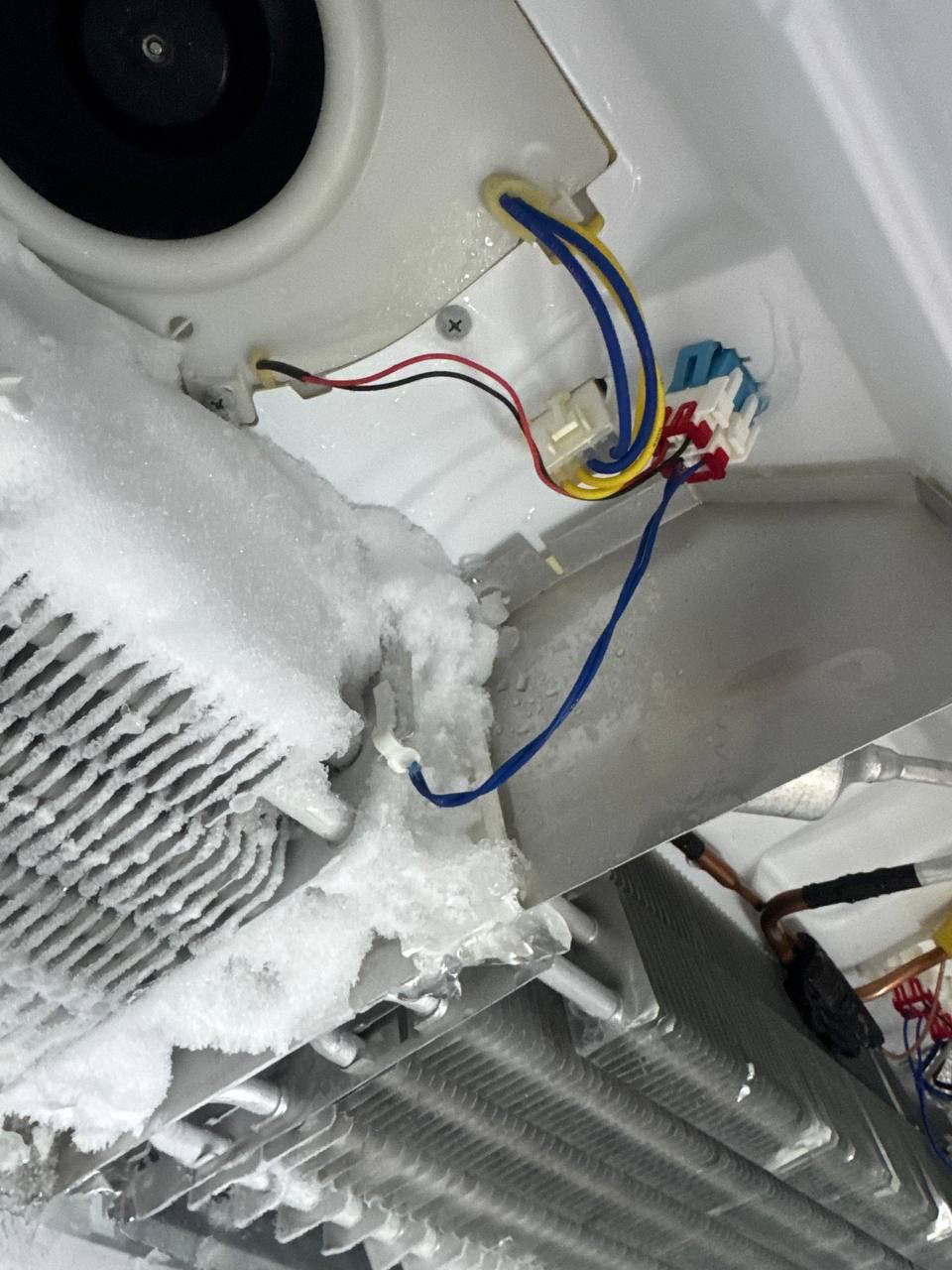
When a freezer is warm in mild weather and the back wall is white with frost, that is a different problem, usually airflow over a frosted coil. A door gasket that leaks and a defrost fault are two common causes, covered in frost on the freezer back wall and a refrigerator that runs constantly.
Will a new range or refrigerator fit?
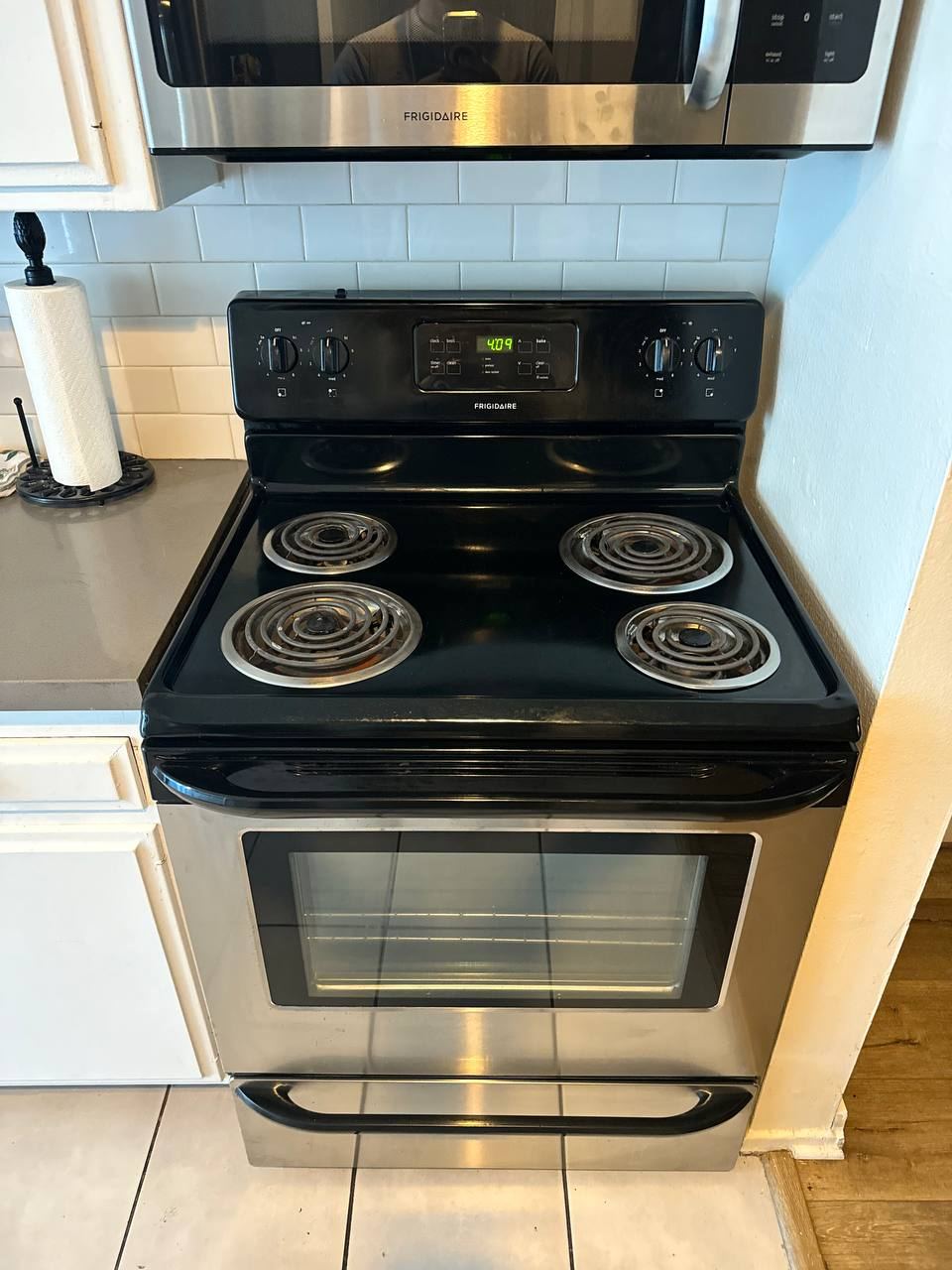
Many Winnetka kitchens keep their original footprint even where the finishes are new: a freestanding range in a fixed slot, a dishwasher added later, a refrigerator in an alcove framed around an older unit. That last one matters most. Before buying a replacement refrigerator, measure the opening at its narrowest point, including casing and trim, then add the clearance the manufacturer lists for that model, and check the door swing against any side wall. If the numbers do not work, repairing the unit that is already there often moves up the list.
A range swap tends to be simpler, but check the back as well as the width. A freestanding range like the one above carries its controls on a rear panel, while a slide-in puts them at the front and is built to sit between counters. Read the installation instructions for the new model before the old one leaves the house.
A dishwasher that will not drain
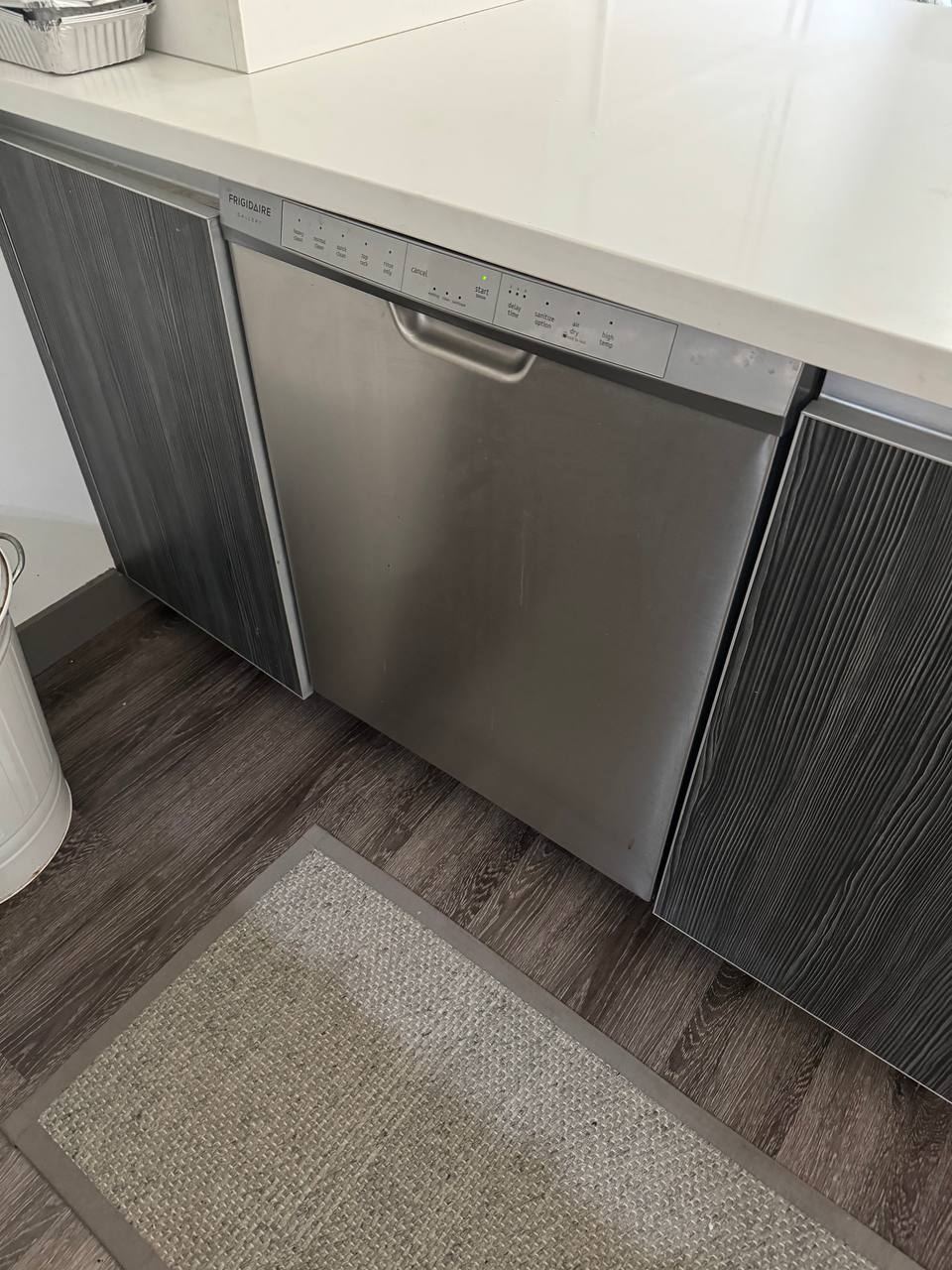
A dishwasher added to an older kitchen shares its drain with whatever was done under the sink at the time, and later changes there are a common source of trouble. If the garbage disposal was replaced recently, start at the inlet where the dishwasher hose connects. Whirlpool notes that built-in dishwashers typically drain via the garbage disposal, so removing the knock-out plug is critical for draining the dishwasher, and that this sometimes-neglected step is a common misdiagnosis for a clogged or not-draining dishwasher. Otherwise look at the drain hose, the air gap and the filter. The full sequence is in a dishwasher that will not drain.
Spots and streaks on glassware
A dishwasher that has started leaving spots or wet dishes is another frequent call. Check the rinse aid first. Whirlpool says rinse aid greatly improves drying by allowing water to drain from the dishes after the final rinse, and that it also keeps water from forming droplets that can dry as spots or streaks. Then rinse the filter in the floor of the tub and clear the spray arm holes. The related checks are in a dishwasher that leaves dishes wet.
An ice maker that slows down
Before deciding an ice maker has failed, check the water supply. Among Whirlpool's tips: make sure the water shutoff valve is fully open, check the supply line for kinks (especially if the refrigerator was moved recently), and replace the water filter, since a clogged filter can decrease water flow. Its guidance says most Whirlpool refrigerators with water and ice features operate best with household water pressure of 30 to 120 psi at the refrigerator connection. With a reverse osmosis system, Whirlpool says the pressure at the water inlet valve needs to be between 40 and 60 psi. If the supply checks out and the bin still stays empty, the next steps are in an ice maker that is not making ice and on the ice maker repair page.
Rentals and duplexes
A good share of the work here is for landlords and property managers, where the question is whether it can be fixed today and what it will cost. The price is agreed before the work starts, so it can be passed to whoever signs off on it.
Where a homeowner should stop
Two lines. Anything holding refrigerant is not a driveway job: EPA Section 608 rules prohibit intentionally venting refrigerant while servicing, repairing or disposing of refrigeration equipment. Opening a sealed system takes recovery equipment and Section 608 certification. Anything involving gas past cleaning a burner cap belongs to a technician. Everything before those lines is a flashlight, a tape measure and a vacuum.
What we fix in Winnetka
- Refrigerator repair in Winnetka
- Washer repair in Winnetka
- Dryer repair in Winnetka
- Dishwasher repair in Winnetka
- Oven and stove repair in Winnetka
- Microwave repair in Winnetka
- Garbage disposal repair in Winnetka
- Ice maker repair in Winnetka
Questions we get
Do you charge for the visit in Winnetka?
We tell you the cost of the visit when you call, before anyone comes out, and the price of the repair is agreed with you before any work starts. Nothing is decided after the fact.
Are you open on the weekend?
We are open Sunday from 7:00 to 19:00 and closed Saturday.
Can you come out the same day?
Usually yes in Winnetka. Call early in the day and the odds are much better.
Why does my garage refrigerator stop holding temperature in summer?
Whirlpool's installation guidance says a standard refrigerator is intended for use in a location where the temperature ranges from a minimum of 55°F to a maximum of 110°F, and that in hot weather, garage heat can overwork the cooling system. A closed garage in the West Valley can approach or exceed that range on a summer afternoon. Vacuum the condenser coil and check the clearance around the cabinet first, and call if it still will not hold temperature.