A dishwasher that finishes with water still sitting in the cups is usually doing what it was designed to do. Most machines sold in recent years lean on condensation rather than on a long heated dry phase, and that fails quietly when the rinse aid runs out, when the water arrives cool, or when a bowl is loaded flat. Four checks separate that from an actual fault, and two take under a minute.
What the machine is doing after the last rinse
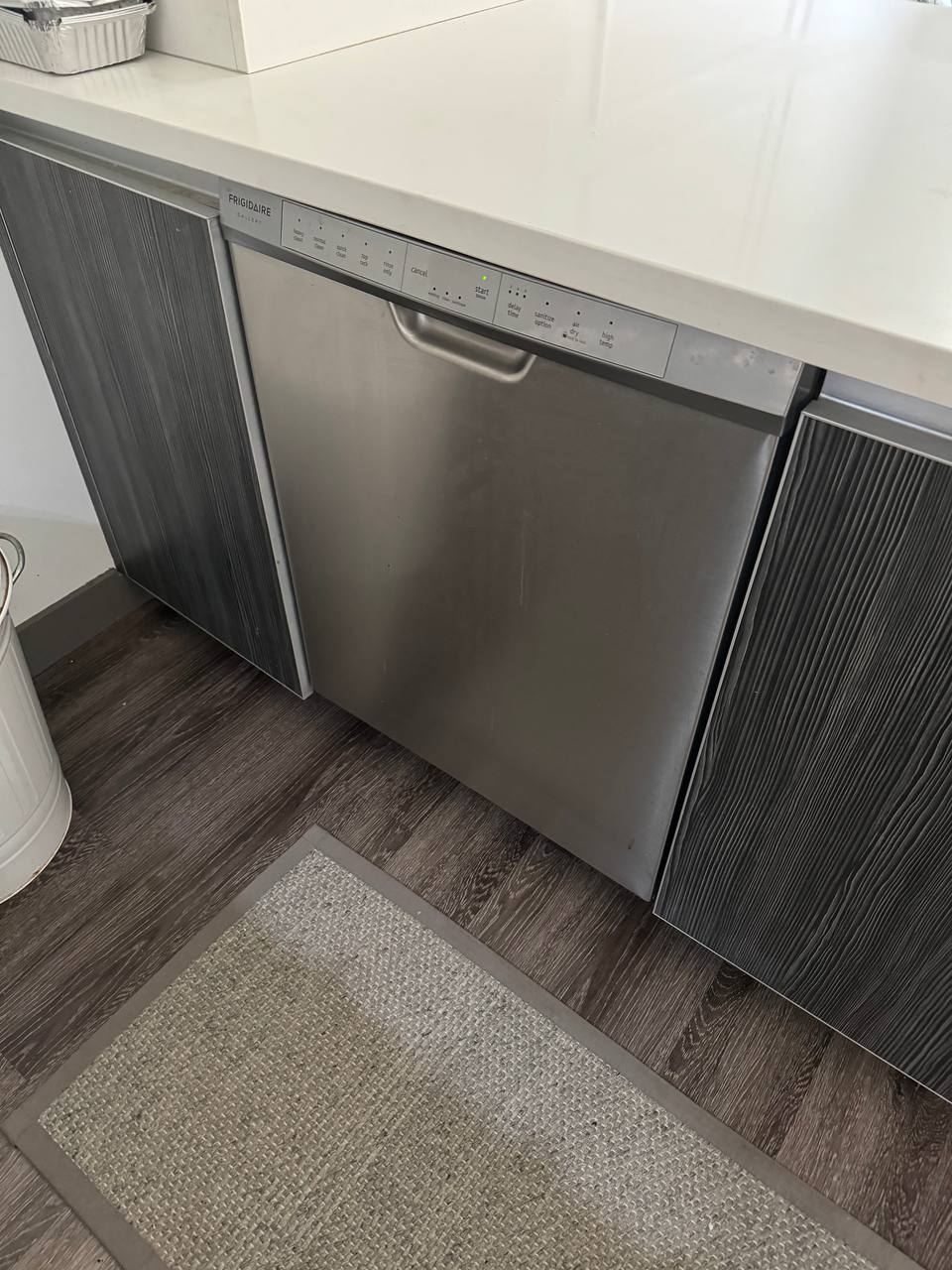
The final rinse heats the load. When the cycle ends, the stainless tub cools faster than the glass and porcelain inside it, so moisture leaving the hot dishes condenses on the tub wall and runs down into the sump. On most machines nothing blows air across the load while that happens. Bosch calls its version PureDry and states on its own product page that it is a closed drying system which does not pull in outside air or use an exposed heating element. Other brands vary: some hide the heater the same way, others still carry an element in the floor of the tub that lifts the final rinse temperature and adds heat at the end.
That difference decides where you look. On a machine with an element in the tub, that element usually heats the wash water as well, so when it fails you can get cold dishes and weaker washing out of a single fault rather than two. In a house with a genuinely hot supply the wash can still look fine, and only the drying gives it away. On a machine with no exposed element there is nothing under the bottom rack to inspect, even though the machine still heats water. Bosch describes a sanitize option on most PureDry models that heats the water to 162°F, so the heat exists, just not where people expect to find it.
1. Rinse aid
Rinse aid changes how water leaves a surface. Without it, water stays in droplets that sit on the plate until they evaporate. With it, the water sheets off and drains while the load is still hot, which is the mechanism condensation drying depends on. Whirlpool's troubleshooting page puts it first on the list and describes a 5 oz dispenser that lasts one to three months under most conditions.
Whirlpool's instruction is to check the dispenser with the door fully open and level: if the rinse aid is empty, the indicator window reads clear. If the dispenser is full and the dishes are still wet, move the adjuster up one step, not three. Whirlpool's guidance on that adjuster is to change it a little at a time and run a few cycles before changing it again, because just enough rinse aid works better than too much.
2. The temperature of the water arriving at the machine
Whirlpool specifies a minimum of 120°F at the hot water supply line for best wash and dry performance. The dishwasher can raise water temperature once it has the water, but the first fill sets the pace for the cycle, and a fill that arrives at room temperature costs time the machine does not have.
Worth doing before anything else in Valley houses, where the water heater often sits in the garage at the far end of a long run from the kitchen. Run the kitchen tap until it is properly hot, then start the cycle. That removes the variable before anyone talks about parts.
3. How the load is stacked
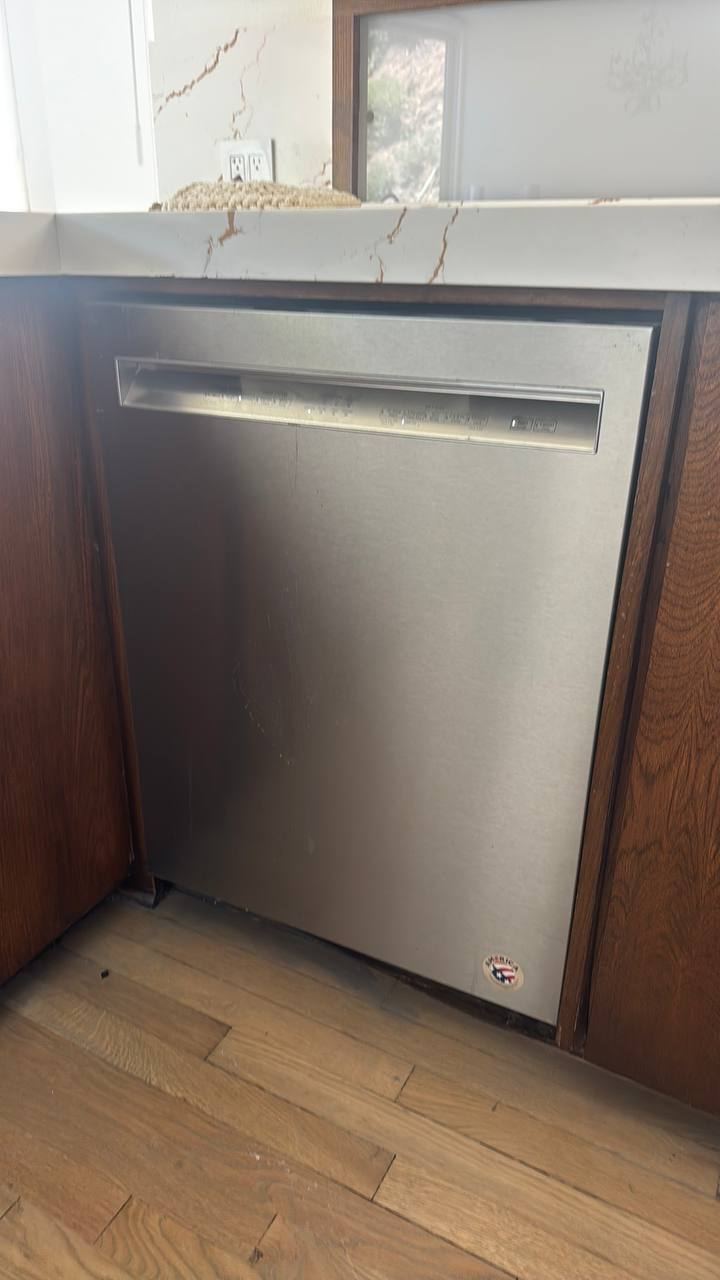
Water that has nowhere to run stays put. Whirlpool's guidance is to place glasses in the upper rack between the wire tines rather than over the top of them, since a tine creates a wet spot, and to angle flat and concave surfaces so water drains off. A mug loaded upright will hold a puddle in its base no matter what the drying system does.
Plastic is a separate case. It does not conduct heat the way glass and ceramic do, so it does not carry enough heat at the end of the cycle to dry itself, and Whirlpool states that towel drying may be necessary for plastic and nonstick items. On machines with an element in the tub, keep plastic off the bottom rack, where it can warp. Bosch is the clearest counterexample, because with no exposed element its own page says plastics are safe anywhere including the bottom rack, and other brands that hide the heater are in the same position. Safe from melting and dry at the end are two different promises, though, and only the first one is being made.
4. The test that says whether anything is broken
Run a normal cycle and open the door the moment it finishes. Put a hand on a plate on the top rack.
- Hot, with steam coming off the load. The heat side is working, so the problem sits on moisture release. Start with rinse aid, loading, and whether a drying option was actually selected. If all three are right, the fault is in the list below
- Barely warm. The heat side is the problem, and that is a genuine fault
On Whirlpool family machines there is a published way to narrow the second case. Run a cycle with the Sanitize option selected. A Sanitize light steady at the end means the machine reached its maximum temperature and the element is working. A blinking light means it did not confirm that temperature, and Whirlpool's wording is that there may be a problem with the element and service should be scheduled. With no Sanitize option, Whirlpool's fallback is a one hour wash with Heat Dry selected, about an hour and a half in total, then check whether the dishes are warm.
Do not carry that light code across brands. It is Whirlpool's convention for its own machines, and other manufacturers may use the same lamp differently.
Where it stops being normal
- A door that no longer opens itself. Machines with an automatic door open dry step crack the door a few inches after the wash phase to release humid air. If yours stopped doing that, check first that the option is still selected with its light on, and that nothing is blocking the door. If both are right, that mechanism is the suspect
- A vent that stays shut. On machines that vent, a flap opens at the end of the cycle to let humid air out. Stuck closed, it traps the moisture inside. By symptom alone this is hard to separate from an empty dispenser or a cold fill, which is why those get ruled out first
- A drying fan that has stopped. Fan assisted models are quiet enough that a dead fan goes unnoticed for months
- The heating element or its thermostat on machines that have one, confirmed by the warm dish test above rather than assumed
- The control board. Last, after the four above, because it is the expensive answer and the easy one to guess at
Where to stop and call someone
Two things are not worth doing yourself. The door latch carries the interlock that stops the machine running with the door open, and defeating it to watch the cycle is how people get scalded by rinse water at full temperature. And a heating element is not a part to buy on a hunch: confirm the machine has one first, because plenty do not, and no element ever fixed an empty dispenser.
If the load comes out hot and still wet with a full dispenser and a sensible rack, that is the point where a technician earns the visit. If water is standing in the bottom of the tub rather than clinging to the dishes, that is a drain fault instead, with a different list behind it. Integrated European units have their own drying behavior, covered in our notes on Bosch units in the West Valley. We handle dishwasher repair across Woodland Hills and the rest of the West Valley.
Questions we get
My dishwasher is new and the dishes are still wet. Is it faulty?
Usually not. Newer machines lean on condensation and depend on rinse aid and a hot final rinse rather than on heat blasting the load dry. Fill the rinse aid, run the kitchen tap hot before you start the cycle, and check whether the load is hot when the door opens at the end.
Do I have to use rinse aid?
On a machine that dries by condensation it is doing real work. Whirlpool lists an empty dispenser first among the causes of poor drying, and describes a 5 oz dispenser that lasts one to three months under most conditions.
Why is the plastic always wet when everything else is dry?
Plastic does not conduct heat the way glass and ceramic do, so it does not hold enough heat at the end of the cycle to drive off its own film. Whirlpool states that towel drying may be necessary for plastic and nonstick items. That is normal behavior of the material, not a fault in the machine.