Standing water in the tub after the cycle
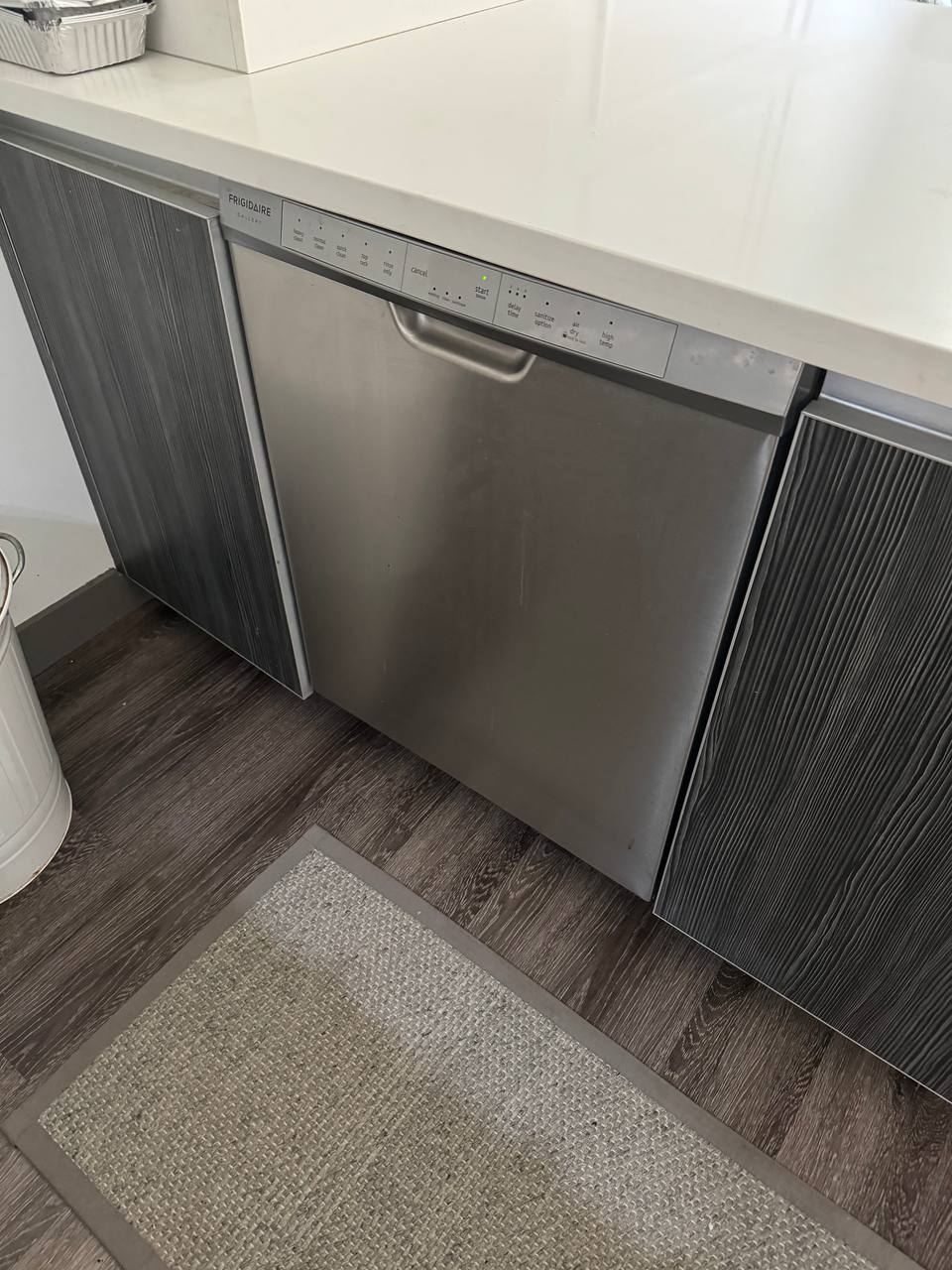
If there is water on the floor as well as in the tub, stop running the machine and go to Water on the floor below. Water sitting over the filter at the end of a finished cycle usually means the drain path is blocked somewhere between the sump and the sink drain, or the pump is not turning. Rule out an interrupted program first, since a door opened mid cycle or a power blip leaves water in the tub on a machine that is working: start a drain cycle and listen. Otherwise there are six candidates, and the first three cost nothing: a filter closed up with grease and starch, a garbage disposal knockout plug that was never removed when the disposal was installed, and a blocked air gap on the sink deck.
The knockout plug is the one that gets misdiagnosed as a dead pump. A new disposal ships with its dishwasher inlet sealed, and whoever installs it has to knock that plug out first. If it is still there, the pump is pushing against a solid wall. The tell is timing: the machine drained fine until the disposal was replaced, or it is newly installed and has never drained once. The full order, from free to expensive, is in our article on a dishwasher that will not drain.
Dishes come out wet
Most machines sold in recent years finish by condensation rather than by a long heated dry phase. The final rinse heats the load, the stainless tub cools faster than the glass inside it, and moisture leaving the dishes condenses on the tub wall and runs down into the sump. On most machines nothing blows air across the load, so the process fails quietly.
Rinse aid, the temperature of the first fill and the way the rack is stacked account for most of these calls. Only after those three does a heating element, a vent flap or a drying fan become a reasonable suspect. One cycle separates the two groups: open the door the moment it finishes and put a hand on a plate on the top rack. Hot, with steam coming off the load, means the heat side works and the moisture is not getting out. Barely warm means the heat side itself is the fault. The checks in order are in why a dishwasher leaves dishes wet.
Dishes come out dirty
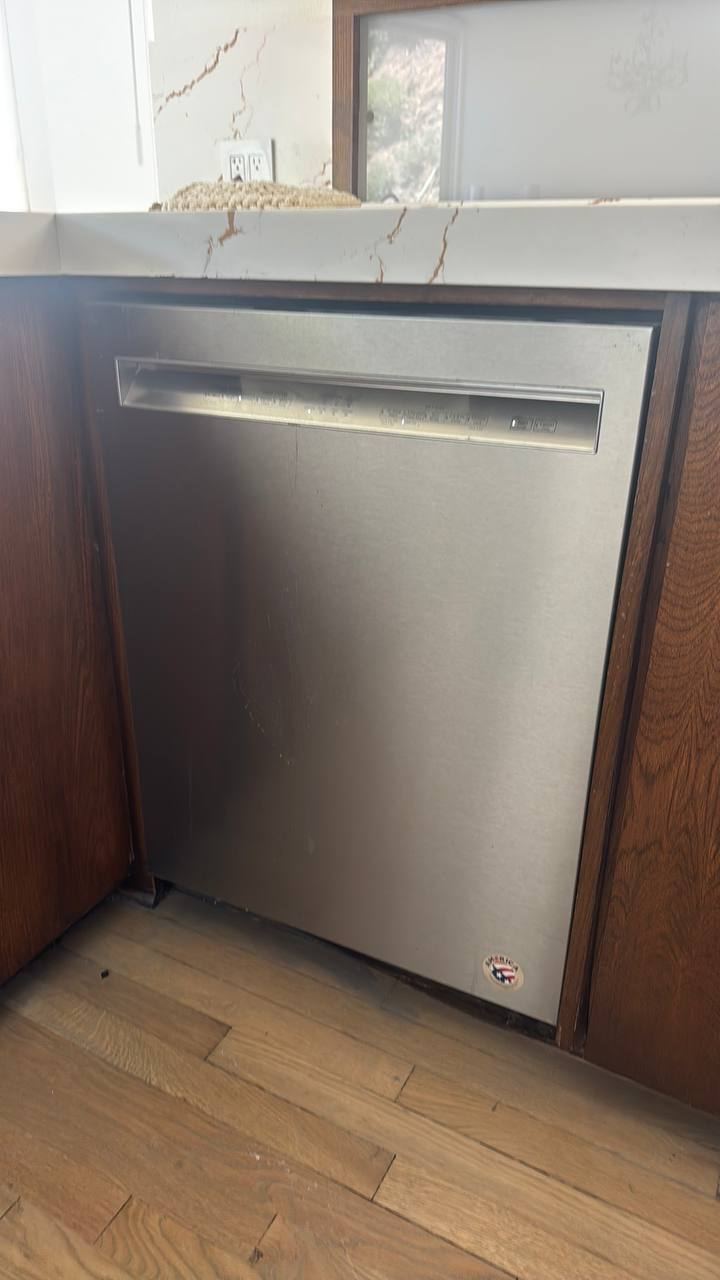
Water not reaching the load is a mechanical problem before it is a chemical one. Spin both spray arms by hand. An arm that catches on a pot handle or a baking sheet is being stopped part way through the cycle, and whatever sits in its shadow comes out untouched. Holes closed by deposit change the spray pattern the same way, quietly, over years, and the same deposit can close the feed to the upper arm.
When only the top rack comes out dirty, look at the feed to the upper arm rather than at the arm itself. On machines with an adjustable upper rack that feed connects through the adjuster, and raising and lowering the rack is what disturbs the connection.
A filter that has never been cleaned recirculates what it caught. Pulling it and washing it in warm soapy water with a soft brush fixes more complaints about cleaning than any part on the machine.
The machine will not start, or stops part way
Start at the door rather than at the pump. The latch has to close an interlock switch before the control will run anything, and a latch out of adjustment, or a door held slightly proud by an overloaded lower rack, reads to the machine exactly like a door standing open. On most machines the panel still lights and the buttons still respond. The cycle simply never starts, or it quits part way through, which is why a lit panel is no evidence that the door is fine.
A machine that starts its cycle but never fills is a different branch. A float stuck in the raised position reports a tub that already has water, so the fill valve is never energized. A fill valve that has failed shut gives the same silence. A fill valve leaking past its seat gives the opposite symptom, water in the tub after the machine has sat off overnight. Three separate faults behind two symptoms, which is why they get checked before anyone opens the control.
Write down any code before you clear it. A code names the circuit the control was watching. It does not name the part.
Water on the floor
A leak and a drain fault are separate problems, and the leak is the one that keeps costing money while you troubleshoot. Water at the bottom edge of the door usually comes from the door gasket or from a tub that overfilled. Water under the toe kick while the door stays dry points further back, at the pump seal, a hose clamp, or the supply fitting at the water valve. Shut the supply valve under the sink and stop running the machine, because a slow leak into a floor cabinet costs more than the repair you started with.
Kitchens in this part of the Valley
Three local patterns show up in a lot of these calls. The first is the water heater in the garage at the far end of a long run to the kitchen, so the first fill can arrive cool unless the tap has been run hot first. That one is free to rule out.
The second is the age of the housing stock. Many kitchens in Canoga Park, Winnetka and Reseda had the dishwasher cut in after the house was built, so the cabinet opening, the drain connection and the air gap were added by whoever did the remodel rather than designed in. Crushed drain hoses, missing air gaps and hoses routed through a hole drilled in the wrong place all come from that.
The third is panel ready integrated machines, common in hillside kitchens in West Hills and Calabasas. A custom door front comes off in a specific order and the unit goes back to the same depth, or the panel never sits flush with the cabinet run again. Under a stone counter the top brackets often cannot be screwed into the slab, so the machine is held to the cabinet sides instead.
What you can check first
- If the machine is newly installed, or the garbage disposal was replaced since it last drained, check the disposal knockout plug before anything else. It blocks everything downstream of it
- Pull the bottom rack, twist the filter cylinder out and wash it in warm soapy water with a soft brush, along with the flat screen underneath it. Put the flat screen back first, then the cylinder, and turn it until it locks
- Spin both spray arms by hand. They should turn freely, and nothing loaded above or below should catch them
- If there is an air gap on the sink deck, lift the cap off and rinse the insert underneath
- Run the garbage disposal with cold water and confirm the sink itself drains
- Check the rinse aid dispenser with the door fully open and level
- Run the kitchen tap hot, then start the cycle
Where to stop
Three things are not worth doing yourself. The door latch carries the interlock that keeps the machine from running with the door open, and defeating it to watch a cycle is how people get scalded by rinse water at full temperature. A heating element is not a part to order on a hunch, because plenty of machines no longer carry an exposed element in the tub at all, even though they still heat the water. And a panel ready built in should not be pulled out on a guess.
We service Sub-Zero, Wolf, Viking, Thermador, Miele, Bosch, KitchenAid, Whirlpool, Maytag, GE, Frigidaire, LG, Samsung, Kenmore and Haier. Licensed and insured, BHGS #49468. More on the brands we see most here: Bosch, Miele, KitchenAid and Thermador.
Questions we get
Bosch and Miele integrated units, do you take those?
Yes. Those are the units most shops turn away, and they are a large share of what we do.
Why do dishes come out dirty on the top rack only?
Usually the upper spray arm feed, either scaled shut or disconnected from the rack adjuster. Raising and lowering the upper rack is what disturbs that connection.
There is always a little water in the bottom. Is that normal?
A thin film in the sump below the filter is normal on many models and keeps the drain pump seal from drying out. Standing water above the filter after a completed cycle is not normal.
Do I need to rinse plates before loading?
Scraping is usually enough. Most machines sold now catch food in a filter you lift out and wash by hand rather than grinding it, so the filter has to be cleaned every few months or the machine recirculates what it caught.