Check airflow before anything else
A dryer that needs two or three cycles is telling you the moisture has nowhere to go. Three checks come before anyone orders a part, and all three are free.
Time one normal load. A regular load that now runs past an hour on a machine that used to finish in forty minutes usually points at airflow rather than heat, because an element that has opened gives no heat at all rather than weak heat.
Pull the duct off the back of the machine and look inside it. A solid grey plug of lint at the first bend is the most common thing we find.
Then go outside and watch the exterior flap while the dryer runs. If it does not lift, the run is packed, the termination is screened over, or something has nested in it.
The US Fire Administration lists failure to clean as the leading factor in home clothes dryer fires from 2018 to 2020, at 31 percent. The three checks above take fifteen minutes.
The vent run is usually what is broken
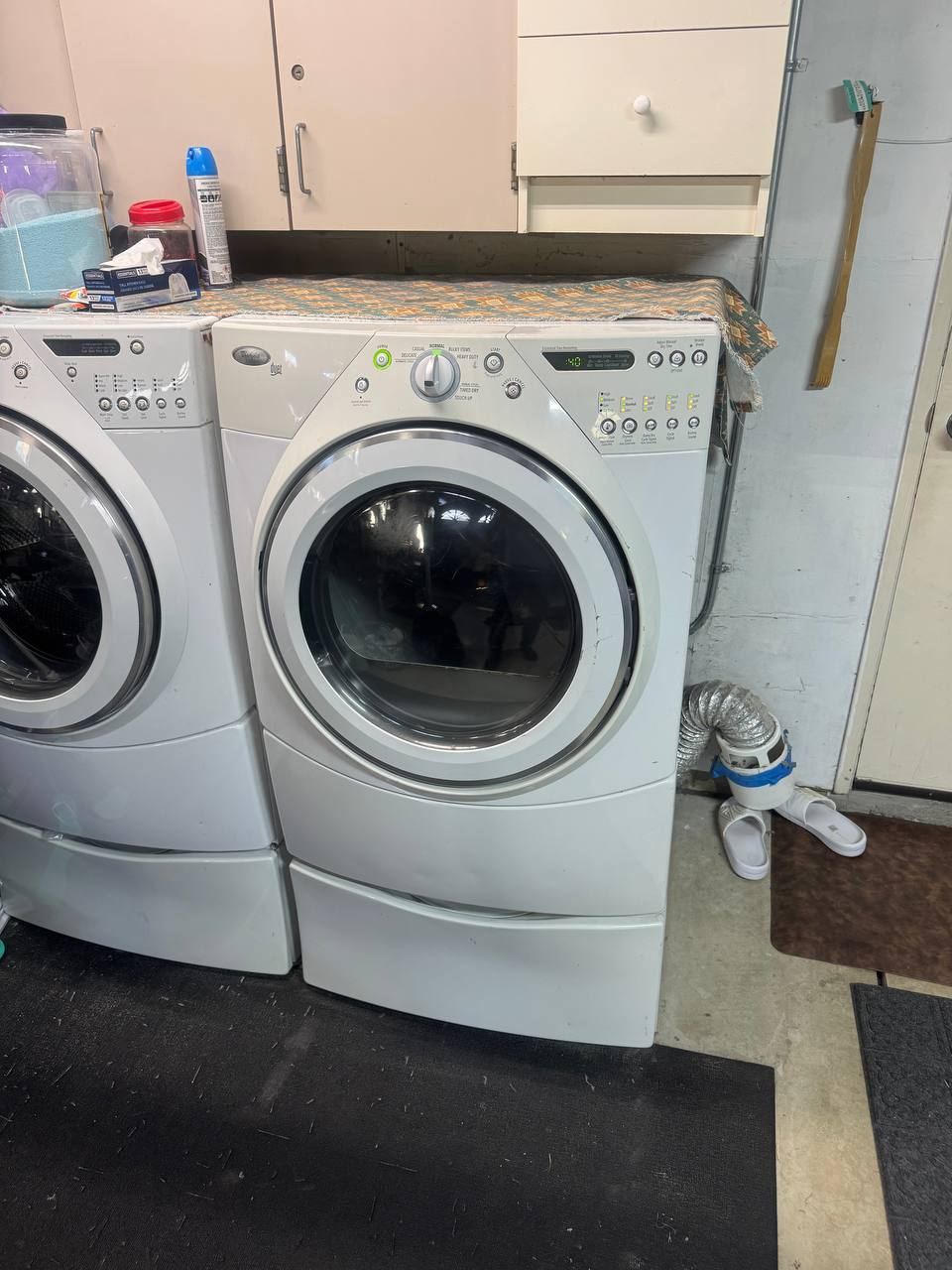
Valley houses hand a dryer three difficult vent situations, and we see all three every week.
Garage laundry. The run is short, but it is flexible foil, it sags between the machine and the wall, and every sag holds lint. A garage sitting above a hundred degrees in August also feeds the dryer hot intake air, so the machine has a smaller temperature difference to work with and stays on longer.
Interior laundry after a remodel. The pair moved into a hallway closet and the duct now travels a long way through a wall with three or four elbows. Every elbow costs airflow, and the dryer itself is fine.
Roof termination. Single story houses here often vent straight up. Lint falls back down the vertical run and packs at the base, and the roof cap is where screening and nesting problems live.
Rigid four inch metal duct with taped joints holds far less lint than flexible foil. Screws do not belong in the joints, because the points sit inside the duct and catch lint.
No heat on an electric dryer
An electric dryer takes 240 volts across two legs. The motor and the controls run from one leg, the heating element needs both. Lose the leg the element alone depends on, to a partly tripped breaker or a loose connection, and you get a dryer that tumbles, times out normally and never warms. Lose the other leg and the machine is simply dead, which is the easier of the two to recognise. The first one is easy to misread, because everything looks alive.
After the supply, the parts in question are the heating element, the thermal fuse and the thermostats. The thermal fuse is a one shot device. It does not reset, and it does not open for no reason. It opens because the machine overheated. Restricted airflow is the usual reason, but a stuck thermostat or an element shorted to its housing will overheat a machine with a perfectly clear duct. Replacing the fuse without finding the cause buys a few weeks. More on that pattern in a dryer that tumbles but will not heat.
Where that fuse sits in the circuit depends on the design. On some machines an open fuse kills the heat only, on others the drum will not turn at all. That is a model question rather than a rule.
No heat on a gas dryer
The sequence on a gas dryer is the igniter glowing, the radiant sensor opening once the igniter is hot enough, the gas valve coils opening and the burner lighting. A gas dryer that tumbles cold is diagnosed by watching that sequence through the burner port.
That is where free advice stops. We will talk anyone through the electric side on the phone. Nobody should be testing gas valve coils in their own laundry room, and a smell of gas is a call to SoCalGas at 1-800-427-2200, which is answered around the clock, not a repair call.
Heat pump dryers are a different machine
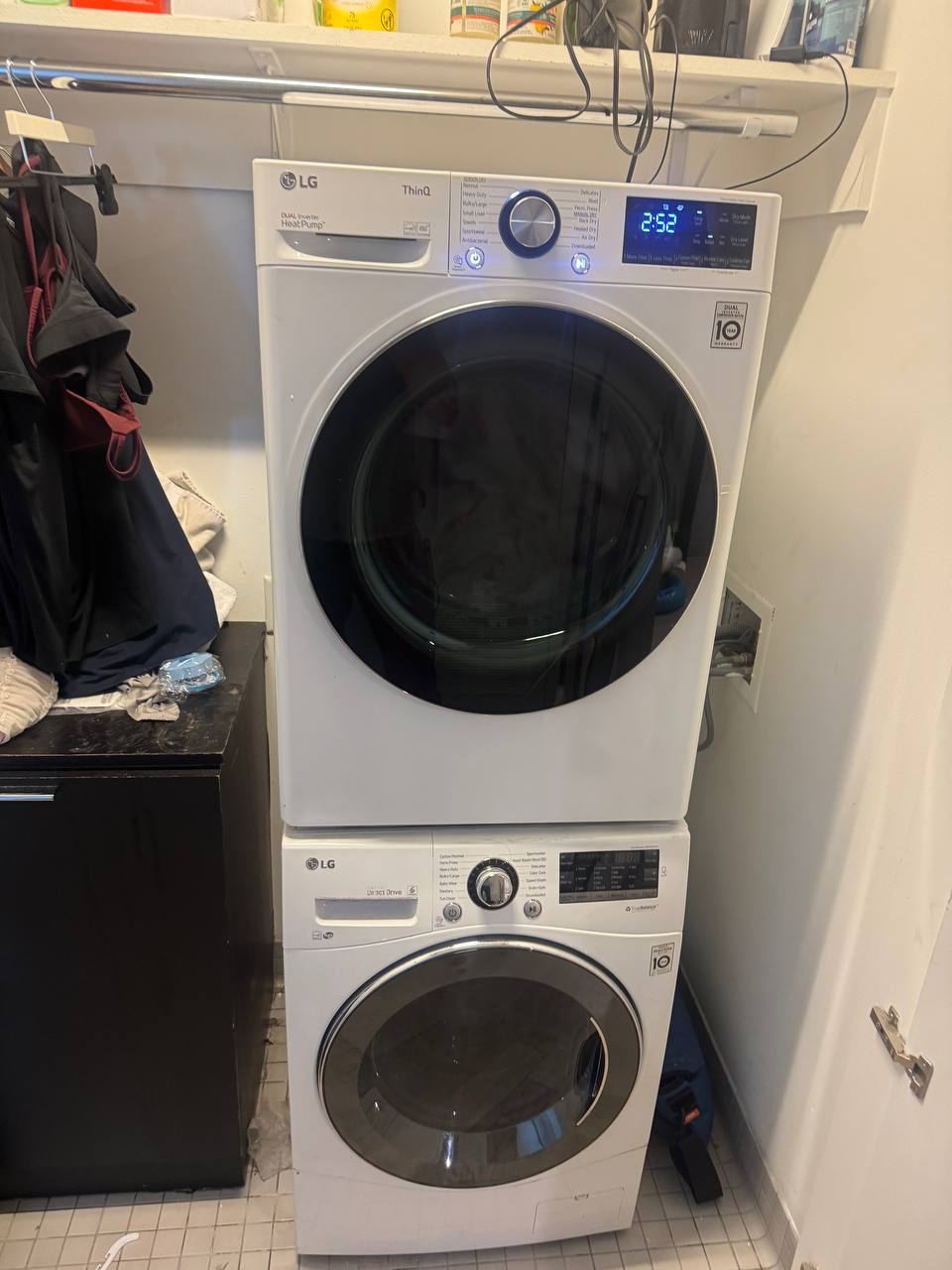
Ventless heat pump dryers turn up in condos, converted closets and anywhere a duct was impossible. None of the vent advice applies to them, and two things confuse people.
First, they dry at a lower drum temperature and take longer than a vented dryer by design. A long cycle on its own is not a fault.
Second, the airflow they care about is internal. There is a filter behind the door filter and a condenser block that collects fine lint, and when those load up the machine slows down or stops with an error. The water it pulls out of the load either runs to a drain hose or fills a tank that has to be emptied, so a full tank or a kinked drain hose stops the cycle with a full load inside.
A heat pump dryer that has been getting slower month by month is asking about its condenser, not its compressor.
It stops early and the clothes are damp
Automatic cycles end on moisture, not on time. The machine reads conductivity across two metal strips inside the drum. Fabric softener and dryer sheet residue coat those strips, the machine reads dry cloth and shuts down with a damp load inside.
The test costs nothing. Run the same load on a timed cycle. Dry on timed and damp on automatic points at the sensor strips. Damp on both points at airflow or at heat, and the vent is still the first thing to rule out. This is the same fork described in why a dryer takes two cycles to dry one load.
Noise
A rhythmic thump that keeps time with the drum comes from the rollers or the belt. A metallic squeal that rises and falls with drum speed is usually the idler pulley or a roller running dry. Both are wear jobs on the drum support, and both get worse rather than better.
A scrape that comes and goes is often a coin past the front seal. Left alone it scores the drum, so it is worth catching early.
Where the free advice stops
Clear the lint screen every load. Clear the duct. Run the timed load test. Empty the condensate tank. All of that is homeowner work and we will explain it over the phone.
Gas components, a sealed refrigerant circuit inside a heat pump dryer, and anything that needs the back panel off are not driveway jobs. A sealed system needs recovery equipment and a technician trained to handle refrigerant. Venting refrigerant during service is prohibited under EPA Section 608.
We service the brands listed here. If the washer next to it is also acting up, that is washer repair.
Questions we get
How often should a dryer vent be cleared?
Once a year for a short straight run, twice a year for long runs with elbows or a roof termination.
Burning smell but everything works. Ignore it?
No. A hot lint smell is the one symptom in this trade worth reacting to immediately. Stop using the dryer and get the vent line opened up.
My dryer has no vent behind it. Is that a problem?
No. Heat pump and condenser dryers are ventless by design. They need the internal filter and the condenser kept clean, and the condensate tank emptied, instead of a duct kept clear.
It heats but takes two cycles. Is the element going?
Rarely. An element normally fails open, which gives no heat at all rather than weak heat, so two cycles is usually an airflow symptom. The exception is an element shorted to its housing, which heats continuously and blows the thermal fuse.