A dryer that tumbles without heating still has an intact motor circuit, so the door switch, the belt, the drive motor and the start circuit are all proven good by the fact that it spins at all. That narrows the fault to the heating circuit alone. On an electric dryer the candidates in order of cost are: a wrong cycle setting, a circuit that has lost one of its two 120 volt legs, a restricted vent, a thermal fuse or high-limit thermostat that the restriction opened, and a burned-out heating element. On a gas dryer, swap the last item for the igniter, the flame sensor or the gas valve coils. Several of the five cost nothing to check.
Why does a dryer tumble but produce no heat?
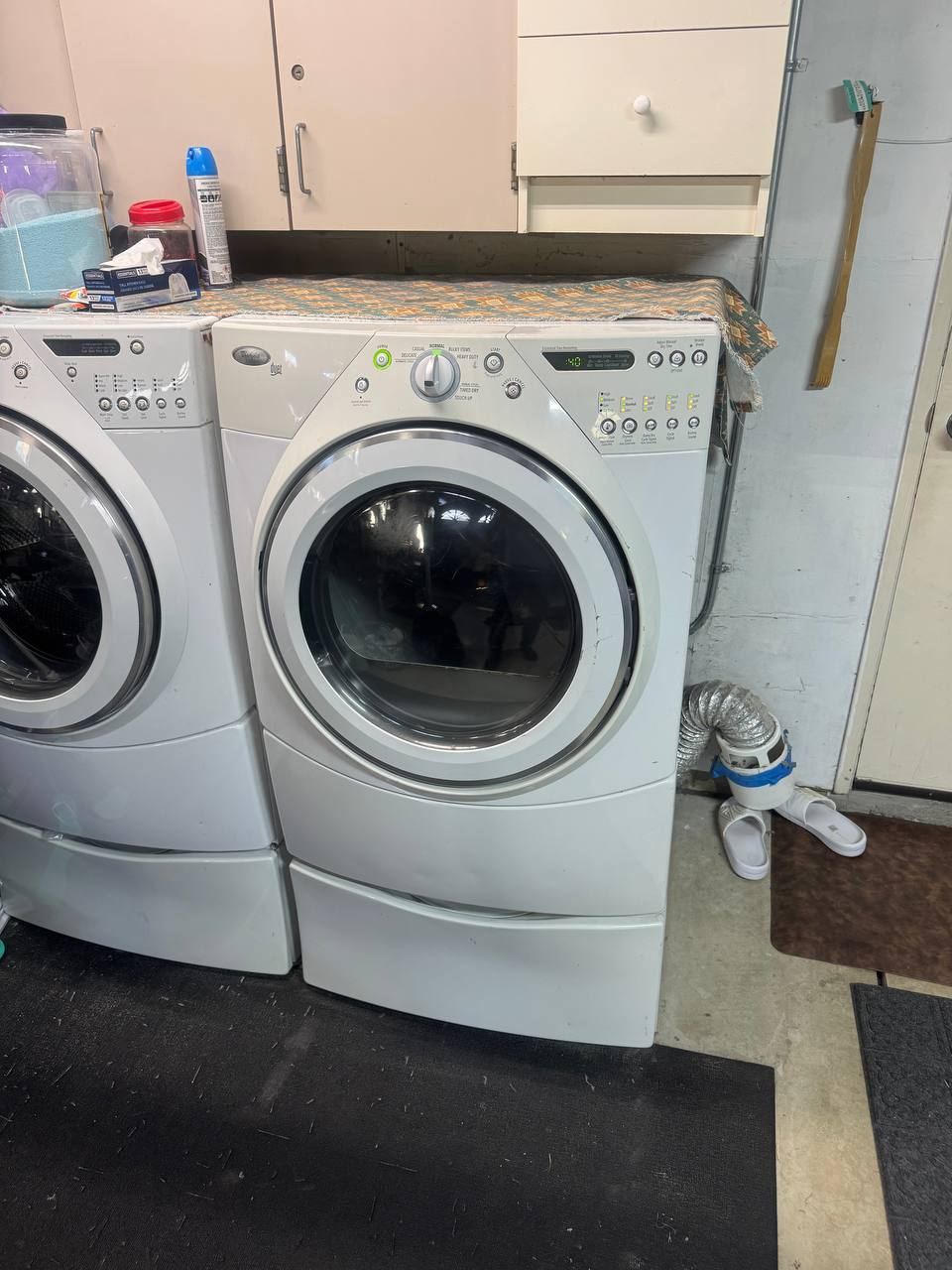
Because the drum and the heat run on separate circuits inside the machine, and only one of them has failed.
On an electric dryer the drive motor, the drum light and the control board run on 120 volts, taken from one hot leg and the neutral. The heating element needs the full 240 volts, which means both hot legs. Everything you can see and hear working is powered by the leg that is still alive.
On a gas dryer the drum motor runs on ordinary 120 volt house power and the heat comes from a burner assembly the control board switches on separately, so again a turning drum tells you nothing about the burner. Whirlpool, Maytag, KitchenAid, Kenmore, GE, LG, Samsung, Bosch, Frigidaire and Haier all separate these circuits the same way, which is why the same short list of parts applies to almost any machine in a Valley laundry room.
Did the breaker lose one leg of 240 volts?
This is the check people skip and it is free.
An electric dryer is fed by a two-pole 240 volt breaker, and both poles are built to trip together. A true half-trip is less common than the internet suggests. What is common is losing one leg some other way: one pole failing internally, a loose lug at the breaker or the neutral bar, or a leg dropped upstream at the service. From the laundry room all of those look identical. The dryer starts, the drum turns, the display lights, the timer advances, and the element never sees the voltage it needs.
Switch the dryer breaker firmly to the full OFF position, wait a second, then back to ON. A breaker that has partly opened will not reset by being nudged, it has to travel all the way off first. If heat comes back, note it rather than forgetting it, because a leg that drops out once tends to do it again, and a failing breaker or a loose lug behind the panel cover is an electrician's job before it becomes a heat-damage job.
The same symptom comes from a loose screw on one hot leg at the cord terminal block on the back of the dryer, and that connection usually leaves a brown scorch mark on the block. Do not take the terminal block cover off with the dryer plugged in. Unplug it first, and if you are not certain what you are looking at, leave it for the dryer repair visit.
Is it the thermal fuse, and why did it blow?
The thermal fuse is a small one-time device mounted on the blower housing or the exhaust duct inside the cabinet. It opens permanently at a set temperature and never resets.
Which symptom it produces depends on where the manufacturer put it, and the two families behave in opposite ways. On Whirlpool-built machines, which covers most Whirlpool, Maytag, KitchenAid and Kenmore dryers, the thermal fuse sits in series with the drive motor. A blown fuse there leaves the dryer dead: the console still lights, and nothing turns. On GE dryers the fuse sits in the heater circuit instead, which produces exactly the fault described here, a drum that turns while nothing gets warm. Samsung is split across both approaches depending on the model line.
That matters before you order anything. If your machine is a Whirlpool-family dryer and the drum is still turning, that thermal fuse is not your problem. The thermal cut-off and the high-limit thermostat on the heater housing, and the element itself, are the better place to look.
The fuse itself is rarely the real problem. It is a symptom, and the cause is nearly always restricted airflow: lint packed into the blower housing, a crushed transition duct behind the machine, a long wall or roof run that has never been cleaned, or a vent hood flap held shut by lint or a bird nest. Fit a new fuse without clearing the duct and you will blow the replacement within weeks.
Airflow is also the safety item. Lint buildup blocks airflow and lets heat build up inside the machine, which the Consumer Product Safety Commission identifies as a cause of dryer fires, and the U.S. Fire Administration tracks as a recurring residential fire cause. Ten minutes with a shop vacuum is cheap insurance either way.
The free airflow test: run the dryer on a heat cycle for five minutes, walk outside and hold your hand at the vent hood. Strong warm air that pushes the flap open means the duct run is clear and the fault is inside the machine. Weak air or a flap that barely moves means the restriction is in the duct, and that is where the repair starts.
How do you tell a burned element from a failed thermostat?
By what each one does when it fails, and if you have a meter, by resistance.
The heating element on an electric dryer is a coiled resistance wire inside a metal housing at the back or the side of the cabinet. It fails by breaking. With the machine unplugged and the leads off, a healthy element measures roughly 8 to 15 ohms across its terminals depending on model and wattage. An infinite reading means the coil is broken and the element is done.
An element that has grounded against the cabinet fails the opposite way: it heats whenever the machine has power, including on cycles that call for no heat, and the clothes come out scorched. That fault also trips the high-limit thermostat, which is a disc mounted on the element housing that opens on overheat. Some models use a resettable disc and some use a one-shot that must be replaced. A tripped high-limit and a blown thermal fuse share a root cause, and it is the same one as before: airflow.
The cycling thermostat is not usually a no-heat part, and it gets replaced unnecessarily all the time. It regulates temperature during the cycle, so when it fails you normally see clothes that come out too hot, or a cycle that never reaches temperature, rather than a complete absence of heat.
If you do not already own a multimeter, do not buy one for this job. Reaching the element on most cabinets means pulling the machine away from the wall and removing the front or rear panel, and the value of the reading is smaller than the risk of reassembling a 240 volt appliance incorrectly.
What is different on a gas dryer?
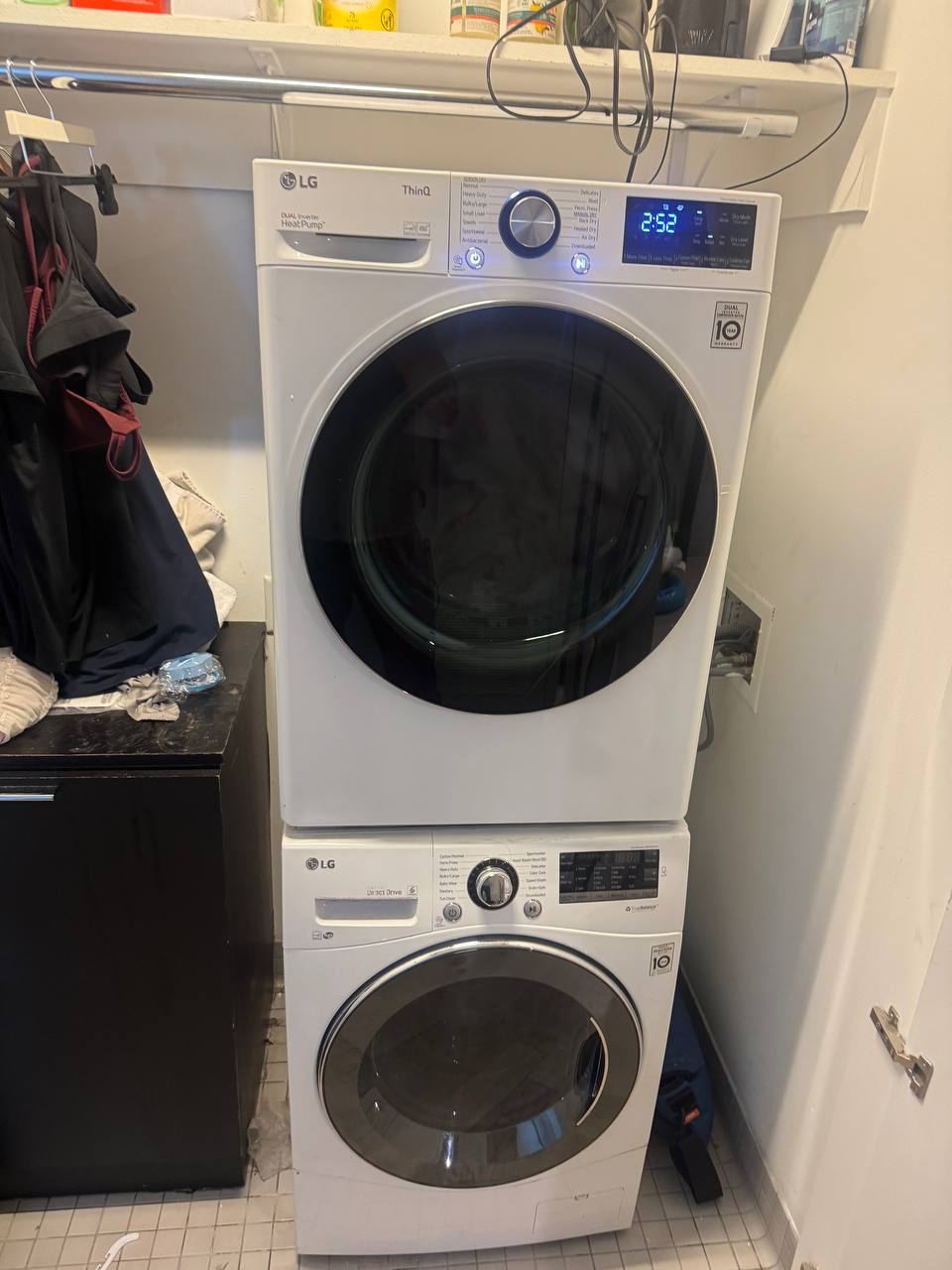
There is no heating element. The burner sequence is: the control calls for heat, the igniter glows orange, the radiant flame sensor opens once the igniter is hot enough, the gas valve coils energize, and the burner lights. After that the sensor's job is to close again when the flame goes out, so the igniter is re-energized for the next light. What ends the heat at the end of a cycle is the cycling thermostat, or the thermistor and control board on newer machines, not the flame sensor.
Each failure has a distinct signature. If the igniter glows and then goes out with no flame following, the gas valve coils are the usual answer, and they are a wear item sold as a matched set. If the igniter never glows at all, either the igniter is cracked or something upstream is open, typically the thermal fuse, the high-limit or the flame sensor. If the burner lights and then dies after a few seconds without relighting, look at the flame sensor and at the vent, because a restricted duct will cycle the high-limit repeatedly.
One thing to know before you call: if the gas supply has recently been shut off, the valve has to purge air from the line and the first two or three ignition attempts can fail normally. That is not a fault.
Never hold a flame to the burner to test it, and never bypass a flame sensor. If you smell gas at any point, leave the house and call SoCalGas at 1-800-427-2200 from outside, and do not operate light switches on the way out.
What can you check in ten minutes?
Six things, in this order.
Check the cycle selection first. An air fluff or a no-heat delicate setting produces this exact symptom, and it is the single most common reason we drive out and find nothing wrong. Second, cycle the breaker fully off and fully on. Third, test airflow at the outside vent hood with the machine running on heat. Fourth, vacuum the lint trap housing and not only the screen, because the packed layer sits below where the screen catches. Fifth, pull the machine forward and look at the transition duct behind it for a flat crushed section, which is what happens when a dryer is pushed back hard against a wall. Sixth, on a gas dryer, confirm the shutoff valve behind the machine is in line with the pipe rather than across it.
If all six are clear and the dryer still runs cold, the fault is a part inside the cabinet and it is worth booking.
When is no heat a stop-and-call job?
Four situations. Anything that requires opening the cabinet on a gas dryer. Anything at the 240 volt terminal block or the cord. A dryer that smells burnt or shows scorched lint inside the cabinet, which should be unplugged and left alone until someone looks at it. And a dryer that heats when it is not supposed to, because a grounded element will keep heating with the machine switched off at the control panel.
We work on gas and electric dryers across the West Valley, out of our shop at 6950 Remmet Ave in Canoga Park, and we cover Woodland Hills, West Hills, Northridge and Calabasas the same day. Hours are Monday to Thursday 7:00 am to 7:00 pm, Friday 7:00 am to 5:00 pm, closed Saturday, and open Sunday 7:00 am to 7:00 pm. We service Sub-Zero, Viking, Thermador, Miele, Bosch, LG, Samsung, KitchenAid, Whirlpool, Maytag, GE, Frigidaire, Haier and Kenmore. Licensed and insured, BHGS #49468, verifiable through the California Bureau of Household Goods and Services. Call (818) 325-5525, price is agreed before we start. We are ASL proficient, and deaf and hard-of-hearing customers can book here.
Questions we get
My dryer spins but the clothes come out cold. What is the first thing to check?
The cycle setting, then the breaker. An air fluff or no-heat delicate setting produces exactly this symptom and costs nothing to rule out. Then switch the dryer breaker fully off and fully on again, because an electric dryer needs both 120 volt legs of its 240 volt circuit for heat but only one leg to turn the drum. If the circuit loses the leg that does not feed the controls, the machine tumbles and lights up normally with no heat at all. Lose the other leg and the dryer is dead instead, because that is the one the 120 volt side runs on. Either way nothing in the panel necessarily looks tripped.
Can a blocked vent stop a dryer from heating?
Yes, and it is the most common root cause we find. Restricted airflow drives the exhaust temperature past what the thermal fuse or high-limit thermostat is rated for, and those open to protect the machine. Replacing the fuse without clearing the duct gets you another blown fuse within weeks. Run the dryer on heat for five minutes and hold your hand at the outside vent hood. Strong warm air moving the flap means the run is clear.
How often should a dryer vent be cleaned?
Once a year for a typical household, and more often for a long wall run, a household doing daily laundry, or a vent hood you cannot see from the ground. Clean the lint trap housing as well as the screen, because a shop vacuum down the trap slot pulls out the packed layer the screen never catches.