If the fresh food section is warm and the freezer is still making ice, the compressor is almost certainly fine. Cold is being produced and it is not being moved. In most cases the fault is the evaporator fan, a frost-blocked evaporator coil, or a stuck damper, and two of those three are inexpensive.
Why this specific pattern narrows things so fast
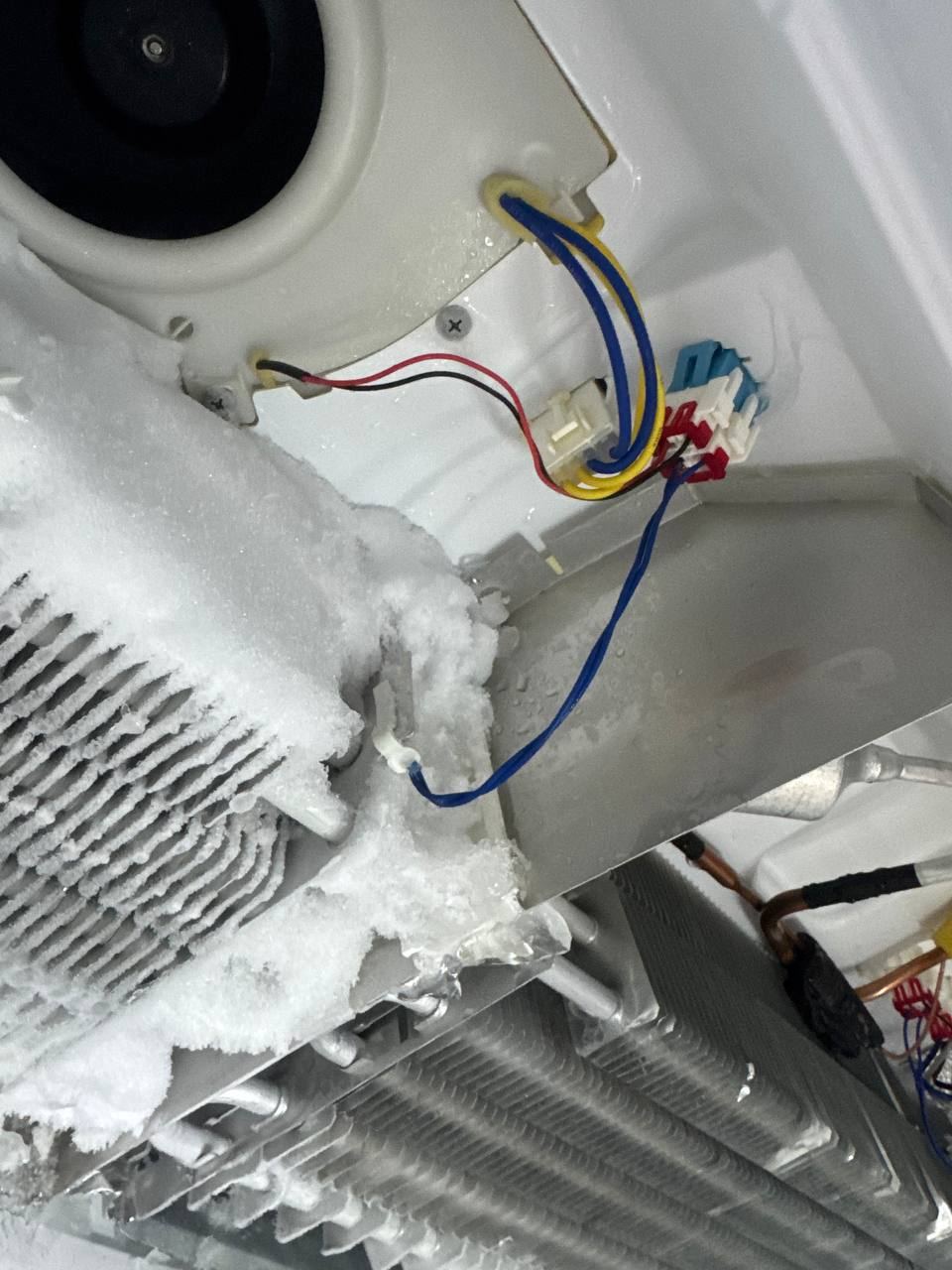
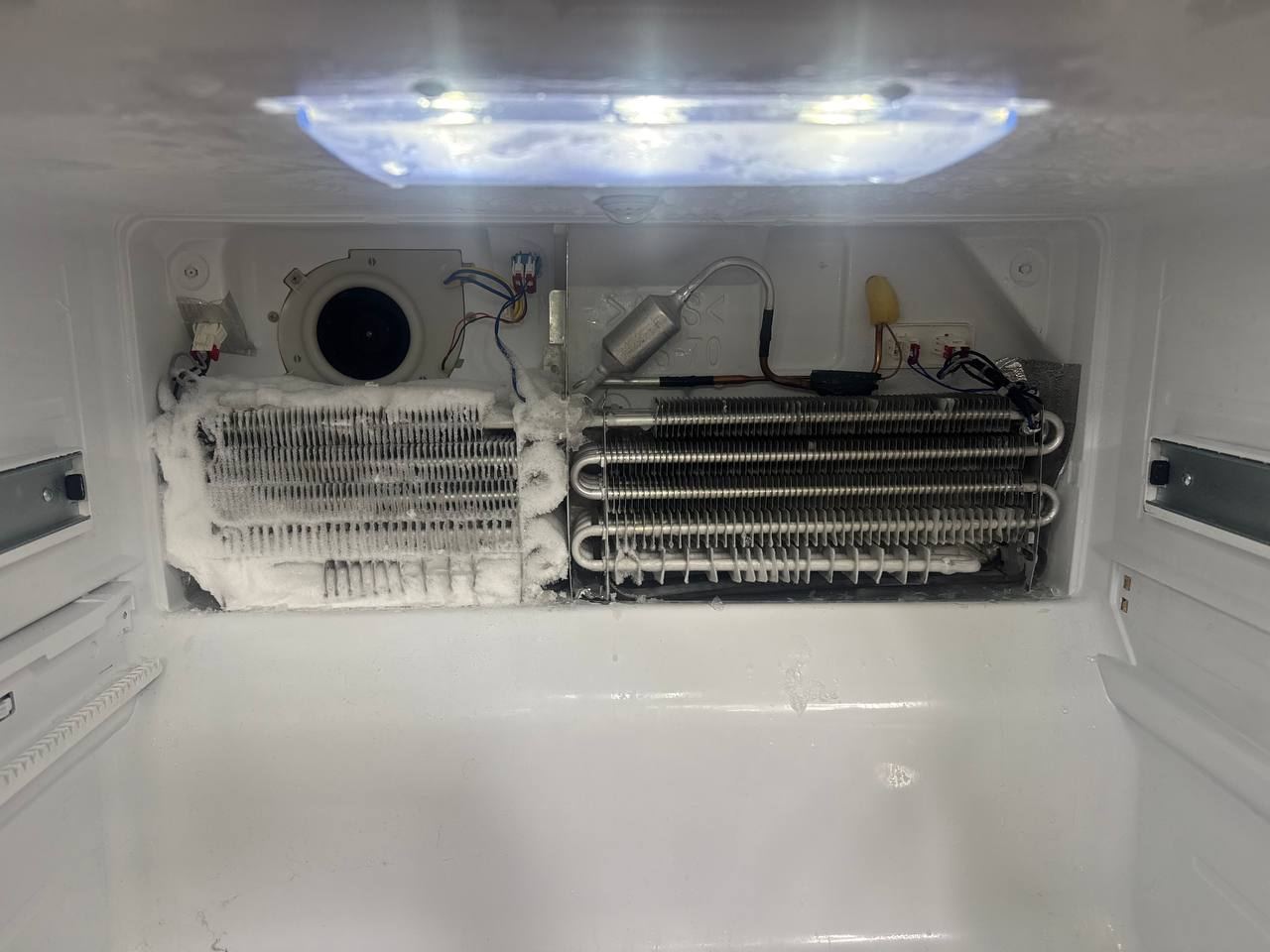
On the overwhelming majority of modern refrigerators, both compartments are cooled by one evaporator coil sitting behind a panel in the freezer. A fan blows air across that coil, then ducts some of it up or across into the fresh food compartment. If the freezer is cold, the sealed system is working. The refrigerant is circulating, the compressor is running, the coil is getting cold. Everything after that point is air movement, and air movement is mechanical.
This is why the same symptom on an old-style refrigerator with two separate cooling systems means something different. Those are rarer now, mostly commercial or genuinely vintage, and they need a different diagnosis path.
The four candidates, cheapest first
1. Evaporator fan motor
The most common cause by a wide margin. The motor seizes, or runs intermittently, or spins slowly enough that no useful air reaches the top compartment. Open the freezer and hold in the door switch, then listen. On a healthy unit you will hear the fan running behind the rear panel. Silence with the compressor running is a strong signal.
2. Frost on the evaporator coil
Every refrigerator frosts up and then melts the frost off on a schedule. If the defrost heater or the defrost thermostat fails, frost accumulates until it becomes a solid block of ice around the coil and the fan can no longer push air through it. The tell is a fridge that gets slowly worse over a week or two rather than failing overnight, and often a fan that sounds like it is hitting something.
You can confirm this yourself. Unplug the unit, empty the freezer, and leave the doors open for 24 hours with towels down. If the fresh food section works normally afterwards and then degrades again over the following days, the defrost circuit is the problem, not the fan.
3. Damper or air diffuser
A flap controls how much cold air crosses into the fresh food side. It can stick closed mechanically, or the control that operates it can fail. Less common than the first two, and usually diagnosed once they have been ruled out.
4. Control board
Boards fail, and when they do they often take the defrost cycle with them. This is the expensive end of the list, which is exactly why it should be the last thing suspected rather than the first thing replaced. A shop that arrives and quotes a board before opening the freezer panel is guessing with your money.
What to check before anyone comes out
- Condenser coils. Pull the unit out and vacuum them. In a Valley summer, a dust-blanketed condenser alone can push a refrigerator out of its working range
- Airflow inside. Groceries stacked against the rear vents in the fresh food compartment will produce this exact symptom in a perfectly healthy machine
- The fan. Door switch held in, listen at the freezer
- Door seals. Close a dollar bill in the gasket and pull. If it slides out with no drag, the seal is finished, and a fridge that is fighting a warm air leak all day will underperform everywhere
- Temperature settings. Obvious, and worth ten seconds, because somebody in the house has usually moved the dial
If all five check out and the fresh food section is still warm, that is the point at which a technician earns the visit.
When it is worth repairing
A fan motor, a defrost heater or a thermostat on a ten year old refrigerator is generally worth doing, because you are replacing a mechanical part on a machine whose expensive components are all healthy. A control board on the same unit is a closer call. A sealed system failure, meaning a refrigerant leak or a dead compressor, usually is not worth it on a freestanding unit and usually is worth it on a built-in column, because replacing a built-in means rebuilding cabinetry.
A note on the Valley in summer
Between June and September the ambient temperature in a Woodland Hills or Chatsworth kitchen can sit above 90 degrees for days. Refrigerators are rated for a room temperature range, and once the room is above it the compressor runs almost continuously. That does not create these faults, but it exposes them much faster, which is why this call spikes every July.
Questions we get
My freezer works but the fridge is warm. Is the compressor dead?
Almost certainly not. If the freezer is making cold, the sealed system is working. The problem is nearly always air movement between the two compartments.
How long can food stay in a warm refrigerator?
Roughly four hours with the door kept closed. After that, anything perishable is a judgment call, and the safe answer is to discard it.
Can I fix an evaporator fan myself?
Some people can. It means removing the rear freezer panel, and on many units the wiring connector is awkward. If you are not comfortable working behind that panel, it is a short job for a technician.