If the cycle has finished and the drum is still full, the machine itself is usually fine and something in the drain path is blocked. Check in this order: the drain hose behind the machine, then the drain pump filter at the bottom front, then whether the lid or door lock is holding the cycle, then the pump impeller, and only after all four the pump motor or the control board. The first two checks are free and take about twenty minutes. VSH Appliance Repair is a family business at 6950 Remmet Ave in Canoga Park, working across the West Valley. Open Sunday 7:00 am to 7:00 pm. Call (818) 325-5525, price is agreed before we start.
Is the machine dead, or is it running and not draining?
These are two different faults and separating them first saves an hour.
If the display is lit, the machine accepts a drain or spin cycle, and you can hear a motor working while the water level stays put, the drain path is blocked. That is most cases, and the rest of this page covers it.
If the machine is completely dead, no lights, no response, test the outlet with something else first. Laundry outlets in older Valley homes are frequently on a GFCI that trips from an unrelated circuit, and the reset button is sometimes in the garage or the bathroom rather than at the machine.
One more split. If the laundry sink or a nearby floor drain also backs up when the washer discharges, the problem is the house drain rather than the appliance, and the right call is a plumber. A washer pushes a large volume very quickly, so it is often the first fixture to reveal a partial blockage in the line.
What do you check first, for free?
The drain hose, and it takes five minutes.
Pull the machine forward far enough to see the back. Follow the corrugated hose from the pump outlet to the standpipe in the wall. Two things go wrong. The hose gets crushed or kinked when the machine is pushed back against the wall, which is the single most common cause after a delivery or a move. And the hose gets pushed too far down the standpipe, which creates a siphon: the machine drains, then the standpipe pulls water back out of the tub, and the cycle never satisfies its level sensor.
The hose end should sit only a few inches inside the standpipe, and the standpipe opening has both a minimum and a maximum height, which is not the same for a front loader as for a top loader. The exact figures are in the installation section of the manual, and manufacturers publish those manuals free by model number, for example through the Whirlpool manuals library. Look yours up before you buy any part.
While you are back there, check the hose is not looped so low that it sits below the water line in the drum.
How do you empty the drain pump filter?
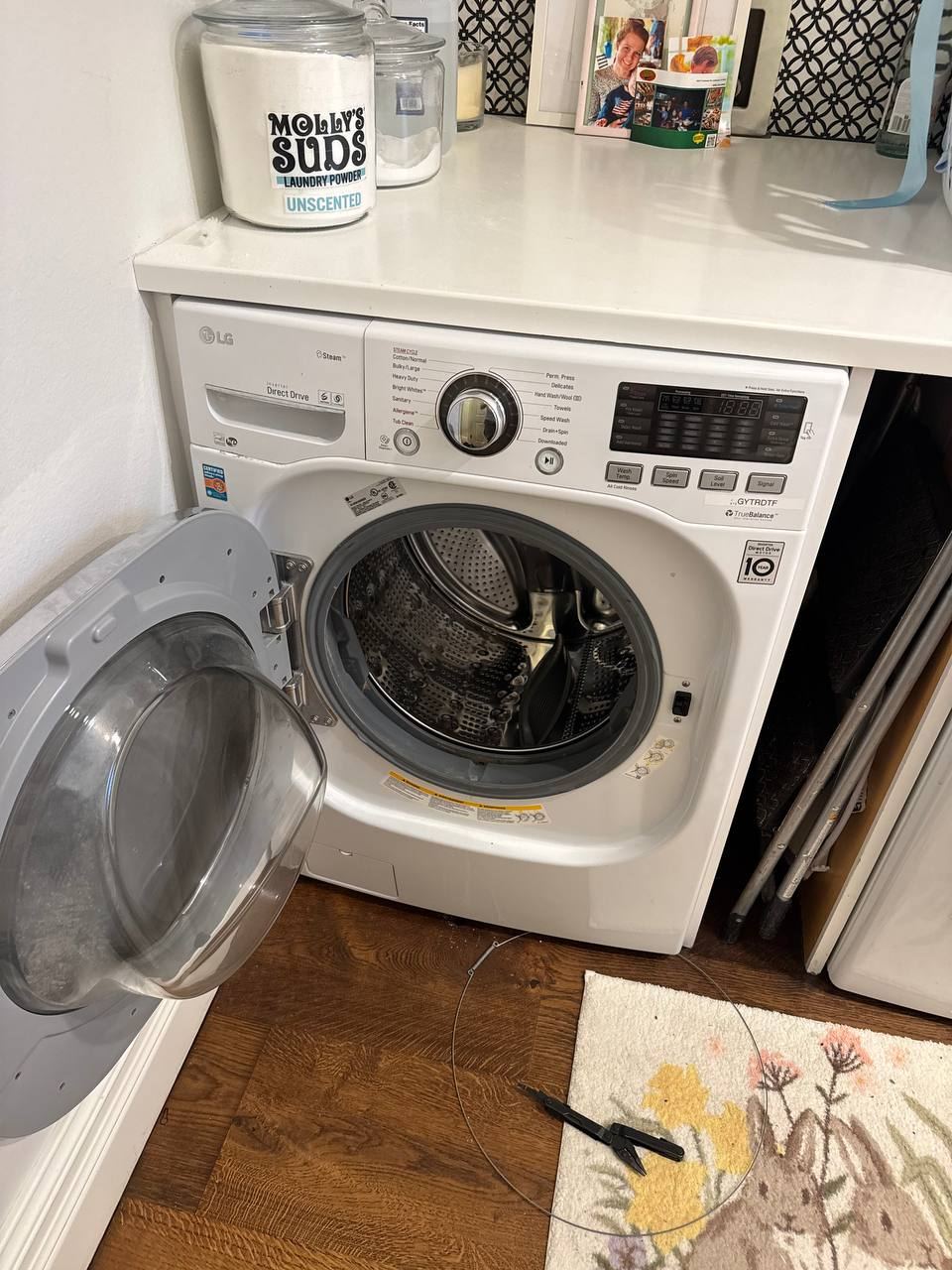
Front loaders and most stacked units have a filter, sometimes called a coin trap, behind a small panel at the bottom front. It is designed to be opened by the owner, and it is the most under-used maintenance point on the machine.
Unplug the machine. Lay towels along the floor and set a shallow baking tray in front of the panel, because a full drum holds several gallons and it will not come out politely. Open the panel. If there is a short drain tube beside the cap, pull the plug on that first and let it run into the tray, refilling as needed, until it stops. Only then unscrew the large cap, slowly, counter clockwise.
What comes out is usually coins, buttons, hair pins, bra underwire, and a gray felt of lint. Rinse the filter under the tap, check the cavity behind it with a flashlight, and turn the impeller you can see in there by hand to confirm it moves. Seat the cap back with the gasket clean and the thread square, because a cross-threaded cap leaks onto the floor on the next cycle. Doing this every three months prevents most of the drain calls we get.
Why does a top loader fill and then stop before draining?
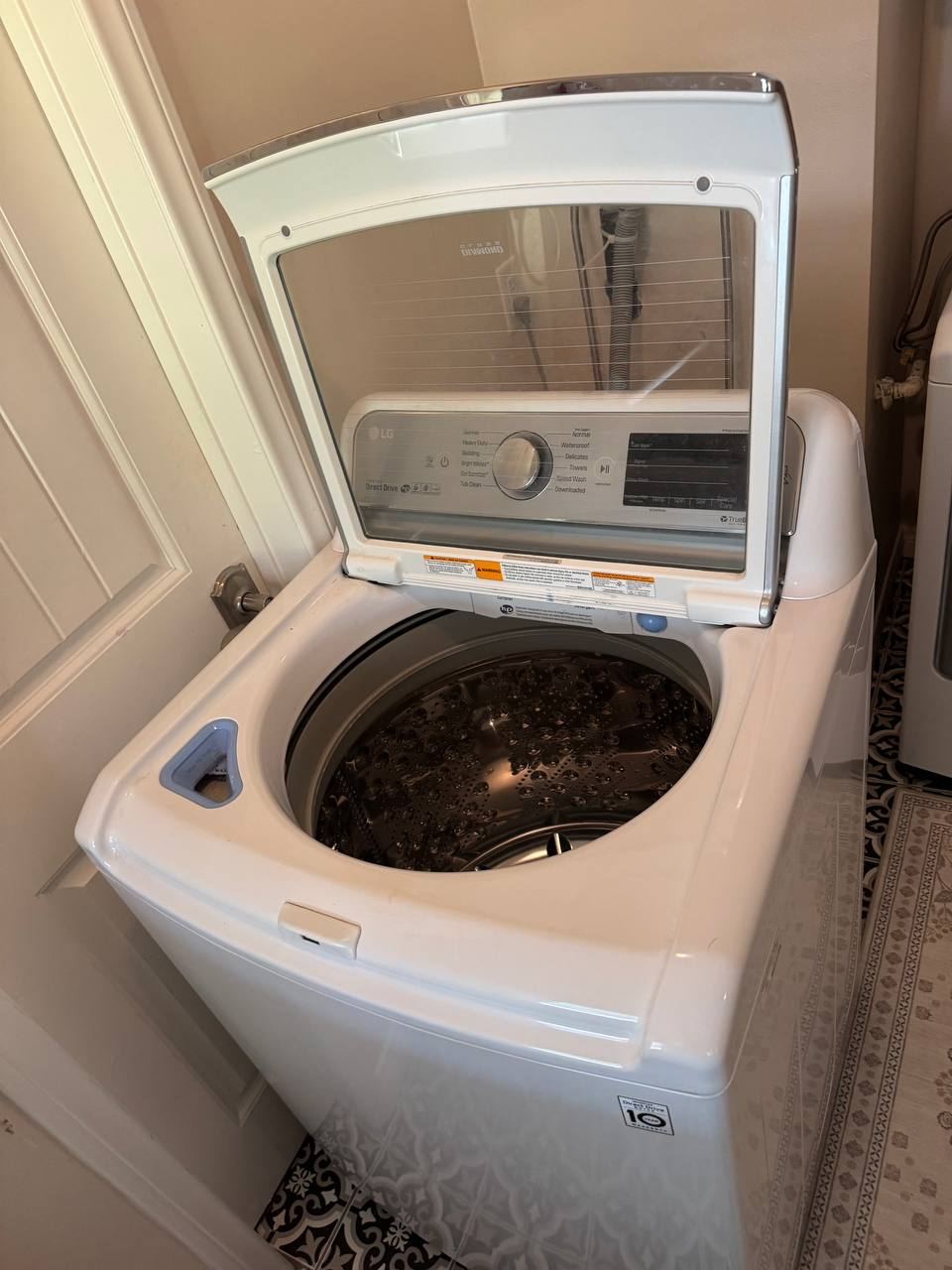
Because the machine does not believe the lid is closed.
Top loaders will fill and agitate with a faulty lid switch on some designs, then refuse to drain and spin, which is a safety interlock working correctly on bad information. Press the lid down firmly and listen for a click as it closes. If the machine then completes the cycle, the switch or the strike is worn. On newer top loaders with a locking lid, a failed lock behaves the same way and often shows a specific error code on the display.
Front loaders show the same behavior through the door lock. If the door will not release at the end of a cycle and water is still in the drum, the machine is refusing to unlock with water present, which is correct, and the fault is upstream in the drain. Write down the exact error code before you cancel the cycle, because it disappears on reset and it names the circuit the machine thinks is failing. That single string saves diagnostic time on a washer repair visit.
What if the pump hums but no water moves?
The motor has power and the impeller is jammed. This is the good outcome, because the object causing it is usually removable through the filter opening.
With the machine unplugged and the filter out, reach in with a flashlight and turn the impeller. A sock pulled past the drum seal, a length of underwire, or a shirt button wedged against the housing will stop it. Clear the object, spin the impeller by hand a few turns, refit the filter and run a drain and spin cycle empty.
If the impeller turns freely and the pump still hums without moving water, the pump motor is failing. If the pump is silent altogether and the machine has no other fault, the pump has failed open, or it is not getting power, and those two are told apart with a meter rather than by ear.
When is it the control board or the pressure switch?
Last, and only after everything above is clear, because these are the expensive answers and they are guessed at far too often.
A washer decides when it has drained by reading a pressure switch or level sensor connected to the tub by a thin clear hose. That hose clogs with detergent sludge, which is a cheap fix, or the switch fails, which is a moderate one. The symptom looks identical to a drain fault: the machine drains, then refuses to move on because it still reads water in the tub.
The control board is genuinely the least likely cause on a drain complaint. Before anyone quotes a board, the hose, the filter, the impeller, the lock and the pressure hose all need to have been eliminated in that order. A board replacement on an undiagnosed drain problem is how people end up paying twice.
Worth one minute: check whether your model is under an open safety recall through the CPSC recall database, which lists appliance recalls by brand and model, before paying for any major part.
How do you get the water out to move the machine?
Through the pump filter drain tube if the machine has one, into a shallow tray, a few pints at a time. It is slow and it is the clean way.
If there is no filter tube, detach the drain hose from the standpipe, hold the open end high, then lower it into a bucket set below the level of the drum and let gravity siphon. Keep the end above the bucket water line so the flow does not stall, and expect several trips. Do not tip the machine forward to dump it, because water gets into the electronics at the front on most designs and a drain problem turns into a board problem for no reason.
Where should you stop?
Anything that requires removing the front panel or the tub is a technician job on a modern machine. The door seal and the balance ring go back wrong easily, and a front loader reassembled slightly out of true destroys its own bearing. A loaded drum is also heavy, and the machine will tip if you pull it out on a wet floor. Unplug before opening anything.
If the hose is clear, the filter is clean, the impeller turns and the machine still holds water, the fault is real. We cover Canoga Park, West Hills, Woodland Hills, Reseda and Northridge same day, and we answer on Sunday, which is when laundry actually breaks. We service Sub-Zero, Wolf, Viking, Thermador, Miele, Bosch, LG, Samsung, KitchenAid, Whirlpool, Maytag, GE, Frigidaire, Haier and Kenmore. If you are replacing rather than repairing, the ENERGY STAR clothes washer listings are the honest place to compare water use. Licensed and insured, BHGS #49468. Call (818) 325-5525. We are ASL proficient, and deaf and hard-of-hearing customers can book here.
Questions we get
My washer is full of water and the cycle is finished. What do I check first?
The drain hose. Pull the machine forward and look at the hose from the back of the washer to the standpipe. A kink behind the cabinet, or a hose pushed too far down into the standpipe, will stop or siphon the drain. That check costs nothing and resolves a real share of calls. If the hose is clear and correctly seated, move on to the drain pump filter.
Where is the drain pump filter on a front loader?
Behind a small access panel at the bottom front of the machine. The side varies by brand, so check both bottom corners. Open it and you will find a large threaded cap and often a short drain tube. Put a shallow pan and towels down first, drain the tube completely, then unscrew the cap. Coins, buttons, hair pins and underwire collect there. Top loaders in general do not have this filter, which is why the diagnosis splits by machine type.
The pump hums but no water moves. Is the pump dead?
Not necessarily. A hum with no flow usually means the impeller is jammed rather than the motor being dead, and a sock or a piece of underwire is the usual object. Once the filter is out you can normally see and turn the impeller by hand with the machine unplugged. If it spins freely and the pump still only hums, the pump is failing and needs replacing.